







OpenAI losses put new pressure on its $1 trillion IPO case
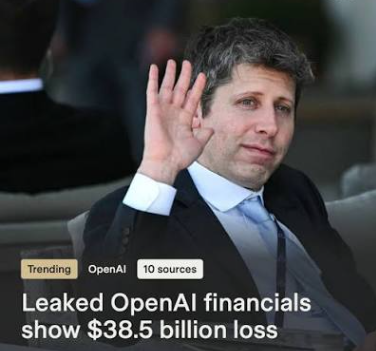
OpenAI losses are drawing fresh scrutiny after leaked financial documents reportedly showed that the ChatGPT maker posted a $38.53 billion net loss attributable to the company in 2025. Independent journalist Ed Zitron reported the figure in Where’s Your Ed At, citing audited financial documents he said were independently verified by the Financial Times.
The documents reportedly show that OpenAI generated $13.07 billion in revenue in 2025, up from $3.7 billion in 2024. But costs rose sharply as well. According to Zitron’s report, OpenAI had $34 billion in total costs and expenses in 2025, including $19.18 billion in research and development and $5.73 billion in sales and marketing. Operating losses were listed at $20.92 billion.
Reuters separately reported, citing the Financial Times, that OpenAI spent $34 billion last year ahead of its planned IPO. The Reuters summary said the company spent about $19 billion on research and development and nearly $6 billion on sales and marketing in 2025.
The positive case for OpenAI is still clear. The company has one of the largest consumer AI products in the world. OpenAI said in February 2026 that ChatGPT had more than 900 million weekly active users and more than 50 million consumer subscribers. Reuters reported that OpenAI confidentially filed for a U.S. IPO in June and could seek a valuation of up to $1 trillion, though the company did not disclose the timing or terms.
The critical case is cost. Reuters reported that OpenAI losses/burned $3.7 billion in the first quarter of 2026, more than half of its $5.7 billion in revenue for the period, citing The Information. Reuters said it could not independently verify that report.
OpenAI losses also show how expensive frontier AI has become. Building large AI models requires data centers, chips, engineering teams and cloud capacity. The AI Decode has covered how AI infrastructure jobs are becoming a major part of the AI economy, but the same infrastructure push is also raising the cost of staying competitive.
For investors, the question is whether revenue growth can eventually outrun infrastructure spending. Reuters reported that OpenAI told investors during its most recent fundraising round that it did not expect to be profitable until 2030, according to a source familiar with the matter.
OpenAI losses do not mean demand for ChatGPT is weak. They do show that the business model behind frontier AI is still being tested. The next thing to watch is whether public-market investors treat those losses as the price of scale or as a warning sign before one of the biggest AI listings yet.