





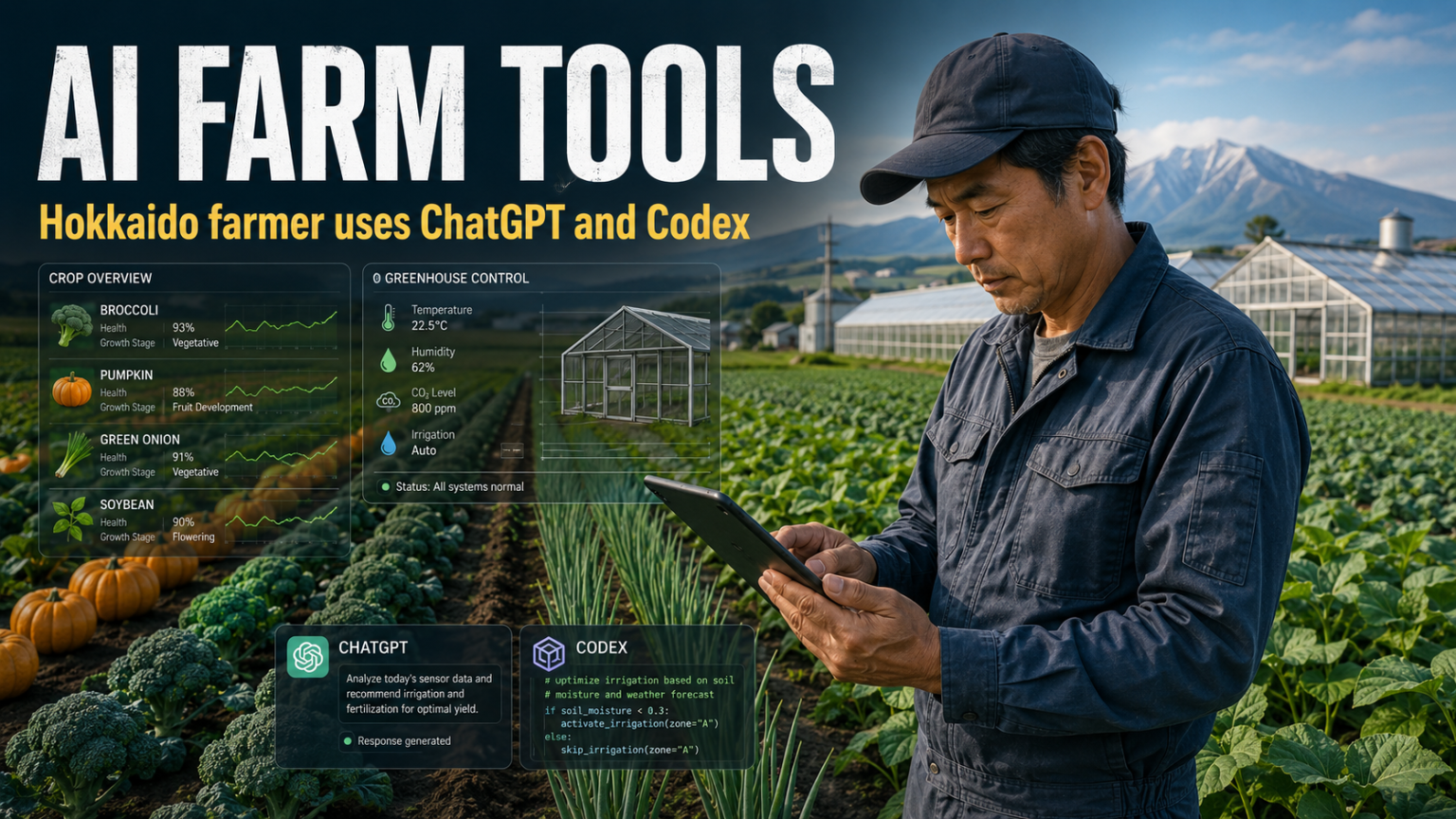

Hiroki Tomiyasu is using AI Farm tools like ChatGPT and Codex to manage greenhouse controls, field data and farm workflows in northern Japan.
A farmer in Hokkaido is drawing attention for using AI farm tools to run parts of a 100-hectare operation that grows broccoli, pumpkins, green onions and soybeans.
The story was shared on X by Ole Lehmann, who pointed to Hiroki Tomiyasu, a Japanese farmer using Codex and ChatGPT to solve daily problems on his farm. The original interview was published by ChatGPT Pro, which said Tomiyasu uses ChatGPT and Codex to learn farming techniques, troubleshoot issues and build tools that automate parts of farm work.
Tomiyasu did not start as a farmer. According to ChatGPT Pro, he grew up outside Tokyo, worked as a public servant and later joined rural farming communities before moving to Hokkaido. Today, he oversees about 100 hectares of farmland.
His use of AI farm tools is practical, not decorative. The interview said he has used ChatGPT to identify possible vegetable diseases, understand satellite field monitoring and explain control-panel wiring for greenhouse systems. He has also used Codex to build a remote-control system for greenhouse roll-up motors using an ESP32, Cloudflare Workers, a LINE bot and a database.
That matters because farm automation is usually expensive. Large farms can buy proprietary systems and hire specialist engineers. Smaller and mid-sized operators often cannot. Tomiyasu’s case shows how AI farm tools may give non-engineers a way to build simple software systems around their own workflows.
OpenAI describes Codex as a coding agent that can read, edit and run code. Its developer documentation says Codex can work in cloud environments and help users fix bugs or understand unfamiliar code.
There is still a limit. Farms involve physical equipment, safety risks and real crops. An AI-generated wiring idea or automation script cannot be treated as final without testing. A wrong output can damage machinery or disrupt farm operations.
Even so, AI farm tools are starting to move beyond office work. In Hokkaido, the point is not replacing a farmer. It is giving one farmer a cheaper way to build tools he would otherwise need an engineer to make.



The AI Decode has also covered how AI coding tools pose serious risks for developers. Tomiyasu’s farm shows the other side of that story: when used carefully, coding agents may help people outside software build useful systems of their own.