







Claude voice mode now supports stronger models and connected apps
Anthropic has updated Claude voice mode so users can speak with more capable Claude models, according to TechCrunch. The feature previously relied on Haiku, Anthropic’s faster and lighter model. The new version can use Opus, Sonnet and Haiku depending on the user’s plan and recent model choice.
The change matters because voice assistants often trade depth for speed. Haiku is useful for quick responses, but Anthropic said more complex voice work can now lean on stronger models. TechCrunch reported that Claude voice mode selects the last model a user used in text chat and defaults to the fastest version of that model family.
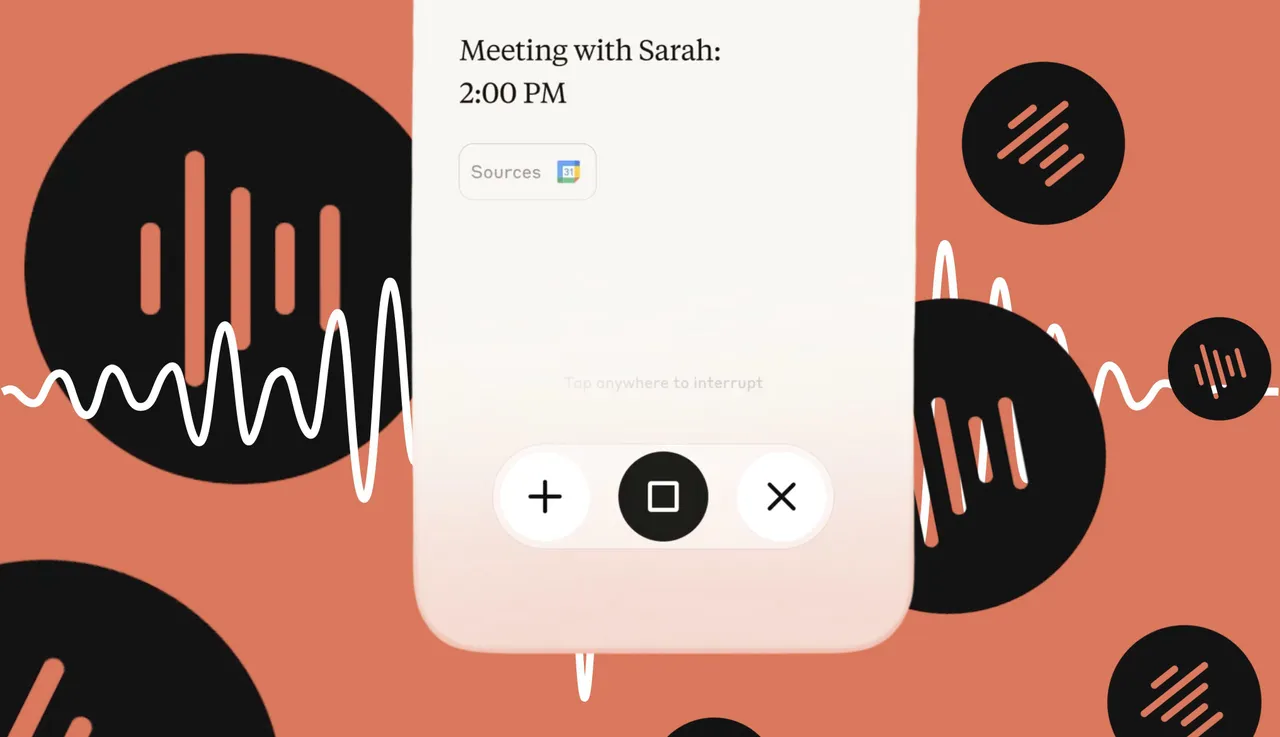
Anthropic is also bringing connected app access into voice. Claude voice mode can use tools such as Gmail, Google Calendar, Slack, Canva and Notion, according to TechCrunch. That means a user could ask Claude by voice to draft an email, move a meeting or create a document, if the relevant app is connected and permissions allow it.
The update puts Anthropic in a different position from OpenAI’s voice push. OpenAI has focused heavily on conversation quality and interruptions. Anthropic’s angle is more work-oriented: voice as an interface for tasks that already live in email, calendars, documents and team chat.
The positive case is clear for office users. Speaking through a pitch, reviewing a meeting schedule or summarizing a Slack thread can be faster by voice than by typing. Anthropic’s connectors help page says connectors let Claude access apps and services based on the user’s permissions, which could make Claude voice mode more useful inside daily workflows.
The limits are also important. TechCrunch reported that free users are restricted to Haiku and only one connected app. Anthropic also did not announce a new voice model or disclose detailed information about the voice stack. That means users may not see the same kind of conversational changes that OpenAI has promoted, such as improved interruption handling.
Model choice is another practical issue. Anthropic’s own Claude model guide says Haiku is lighter, Sonnet balances speed and intelligence, and Opus is meant for more complex reasoning. In voice, that creates a trade-off between response quality, latency and rate limits.
For Anthropic, Claude voice mode is part of a broader move to make Claude feel less like a chatbot and more like a workplace assistant. The company has already leaned into coding, documents and enterprise workflows, while rivals push their own AI agents. For related coverage, read The AI Decode’s Claude Mythos report.


The next test is adoption. Claude voice mode now has stronger models and app access. Whether users trust it enough to let a spoken assistant act inside work apps remains the unresolved question.