






ChatGPT Health rollout brings personal records into everyday AI chats
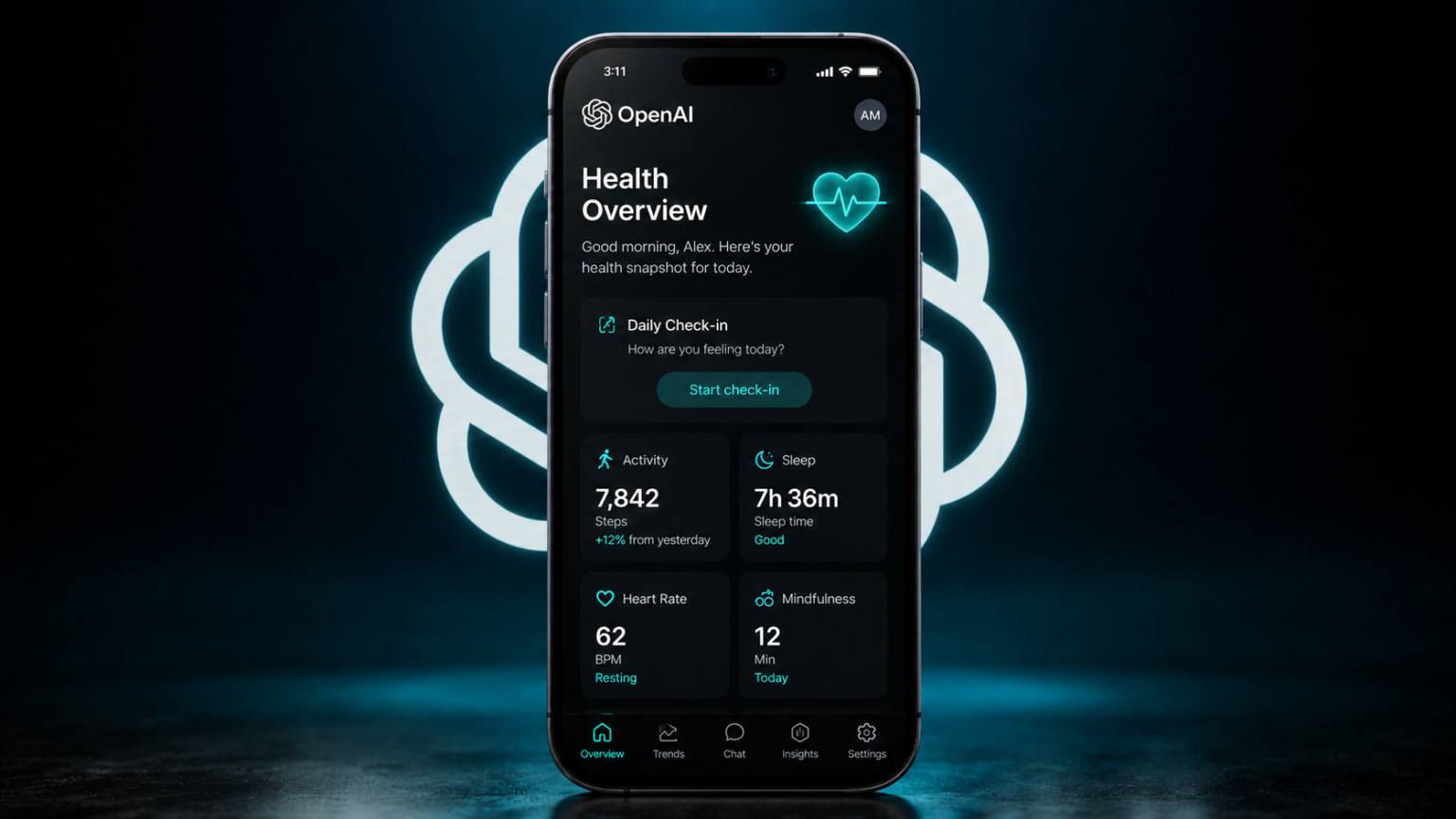
OpenAI is making ChatGPT Health available to eligible U.S. users over 18 across Free, Go, Plus and Pro plans, according to TechCrunch and an OpenAI announcement. The feature lets users connect Apple Health and supported medical records so ChatGPT can answer questions using personal health context.
OpenAI said more than 300 million people ask ChatGPT health-related questions each week. That is up from the 230 million weekly health and wellness queries OpenAI cited when it introduced the dedicated health experience earlier this year. The company said early testing showed more than 70% of health-related conversations happened outside the dedicated Health area.
That finding explains the main change. ChatGPT Health can now be used across regular conversations, with permission, rather than requiring users to begin inside a separate health hub. OpenAI says connected information can include medications, lab results, recent visits, sleep and activity. Users can ask about trends, prepare for appointments or compare new test results with old ones.
The product arrives during a sensitive moment for medical AI. Reuters reported that Florida pastor Scott Winters sued OpenAI and CEO Sam Altman, alleging ChatGPT medical advice caused him to delay treatment before a life-threatening pulmonary embolism. OpenAI told Reuters that ChatGPT is not a substitute for professional medical guidance.
OpenAI’s own help page says ChatGPT Health is designed to support, not replace, medical care and is not intended for diagnosis or treatment. It also says urgent symptoms or emergencies should be handled by professional medical services. That disclaimer matters because people often turn to chatbots when they are anxious, confused or unable to get quick access to care.
The positive case for ChatGPT Health is convenience. Health information is often scattered across patient portals, apps and wearables. A tool that can summarize lab results, list questions for a doctor and explain medical terms in plain English could help users prepare for better conversations with clinicians.
The risk is reliability. A 2025 HealthBench paper by OpenAI researchers and collaborators described an evaluation of 5,000 multi-turn health conversations using physician-written rubrics. The benchmark showed progress, but it also framed health answers as a hard safety problem, not a solved product category. A separate 2023 paper on health-related queries with false assumptions found that chatbots often failed to challenge false premises.
For OpenAI, ChatGPT Health is a test of whether consumer AI can handle sensitive personal data and high-stakes questions without drifting into unsafe advice. For users, the safer reading is narrower: use it to organize information, then verify decisions with a clinician. The next question is whether OpenAI can prove that ChatGPT Health reduces confusion without increasing misplaced trust.


For more on OpenAI’s broader product and infrastructure pressure, read The AI Decode’s OpenAI Jalapeno chip coverage.