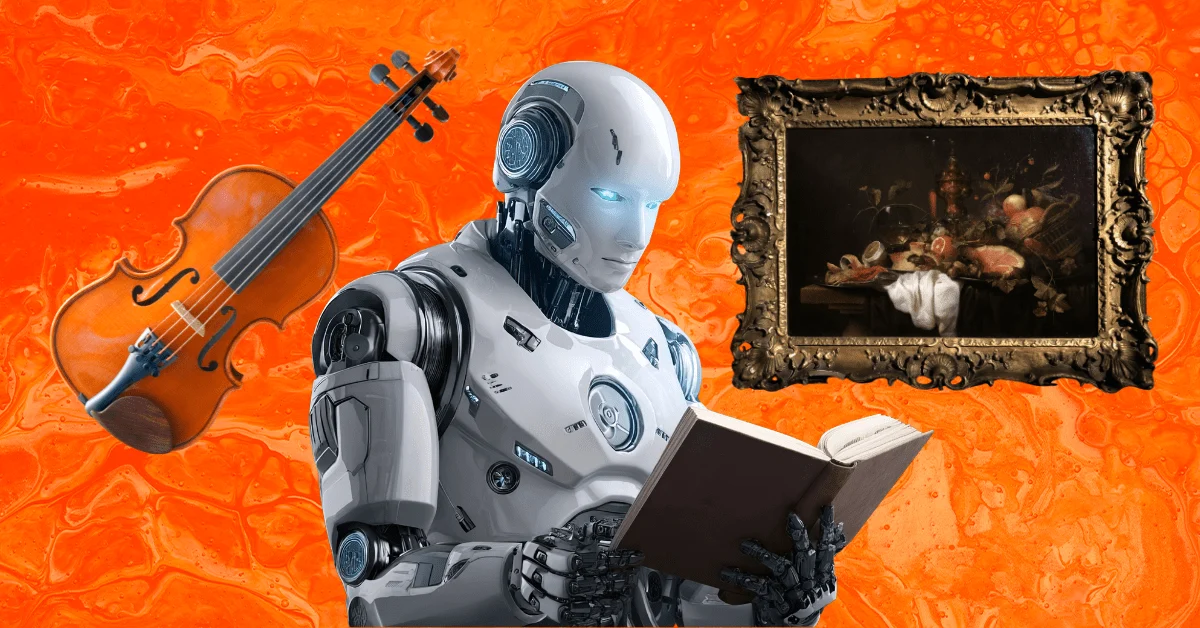

Human-made art may be gaining extra value as AI-generated music and images spread, even when audiences struggle to tell who created the work.
Human-made art may be becoming more valuable precisely because artificial intelligence can now produce so much creative material so quickly.
That idea is emerging across music, writing, illustration and live entertainment as audiences confront a strange question: does it matter who made something if the finished result is enjoyable?
A BBC InDepth report explored the idea of a “human premium,” where people place extra value on knowing that art was created through human effort rather than generated primarily by software.
The debate is no longer theoretical.
AI-generated songs, images and writing are already reaching mainstream platforms in large quantities.
Human-made art matters even when people cannot tell the difference
Music provides one of the clearest examples.
The BBC cited Deezer figures showing that 44% of tracks uploaded to the platform are now AI-generated.
Deezer’s research also found that 97% of listeners surveyed could not reliably distinguish AI-generated music from human-created tracks.
Yet more than half still said human involvement mattered to them.
That gap is important for human-made art.
Listeners may not always be able to identify whether a machine helped create something, but many still want to know.
The value comes partly from the process.
Economics professor Daniel Susskind told the BBC that people often admire art because another human being imagined it and physically or intellectually brought it into existence.
A painting, novel or performance can carry meaning because of the person behind it, not only because of the final result.
Streaming platforms are responding to AI music
Music services are already changing how they present AI content.
Spotify introduced AI Persona badges for artist profiles that represent AI-generated identities.
The platform says those personas are excluded from editorial and algorithmic recommendations by default unless a listener has actively shown interest.
Spotify has also introduced AI Credits that allow artists to disclose whether AI was used for lyrics, vocals, production or other parts of a track.
These systems reflect growing demand for transparency around human-made art.
The label does not automatically tell listeners whether a song is good.
It tells them something about how the work was created.
That distinction could become more important as generative systems improve.
AI may raise the value of obvious human imperfection
Some artists and writers are already moving in the opposite direction from polished AI output.
The BBC cited New Yorker writer Kyle Chayka, who argued that readers are starting to place more value on writing that feels obviously personal.
That can include work that is less polished, more unusual or more structurally messy than the clean output associated with generative systems.
A similar pattern may be appearing in illustration and graphic design.
If AI can quickly reproduce a competent average style, artists have more incentive to create work that looks harder to imitate.
That could create a stronger identity around human-made art.
The value would come from personality, unusual choices and evidence of a specific creator rather than technical perfection alone.
The AI Decode has examined a related trust problem in its coverage of AI deepfake risks, where synthetic content becomes harder to evaluate once audiences cannot easily tell what is authentic.
Creative work creates a different version of the same problem.
People may increasingly want reliable information about origin.
Live experiences may benefit from the human premium
The argument becomes especially visible in live entertainment.
A recorded song can be generated or heavily modified by AI.
A crowded concert or club night still involves musicians, DJs, staff and an audience sharing the same physical space.
The BBC report pointed to increased interest in live entertainment as one possible response to lives becoming more digital.
That could strengthen the value of human-made art because the process is easier to see.
A person playing an instrument, painting on stage or performing live provides evidence of human participation that a digital file does not.
This does not mean audiences will reject AI tools.
DJs already use software to sync tracks. Producers use digital effects. Writers use spelling tools and editors use software throughout their workflows.
The dividing line between AI-assisted and fully AI-generated work may therefore remain difficult to define.
Algorithms changed culture before generative AI arrived
Generative AI is also entering a cultural system already shaped by algorithms.
Music services recommend songs.
Streaming platforms decide what films appear first.
Social networks rank images and videos according to predicted engagement.
People have gradually accepted those systems because they make discovery easier.
That could weaken the premium around human-made art over time.
If audiences become used to consuming whatever an algorithm recommends, they may care less about how the content was produced.
The AI Decode’s report on AI student learning examined a related tension around automation: tools can make a task easier while also removing some of the human effort that once gave the process value.
Creative work faces the same question in a more emotional form.
If software can produce the result, what part of the process do people still want humans to perform?
Human-made art may become a label of its own
Researchers and creative groups are already discussing ways to identify work produced primarily by people.
The BBC reported that academics are exploring a widely recognised symbol for human-created work, similar in concept to certification labels used in other industries.
Some books, albums and films already use “AI-free” labels.
That could turn human-made art into something consumers actively look for rather than simply assume.
There is no guarantee that such a premium will last.
Younger audiences may become more comfortable with synthetic artists. AI tools may become so embedded in creative software that drawing a clean line between human and machine work becomes impossible.
The value of human-made art may therefore depend less on banning AI and more on transparency.
People can decide what matters to them only if they know how something was created.
As generative systems produce more music, images and writing, that information may become part of the artwork’s value.
The next question is whether audiences keep paying attention to the person behind the work once AI-generated content becomes ordinary.