





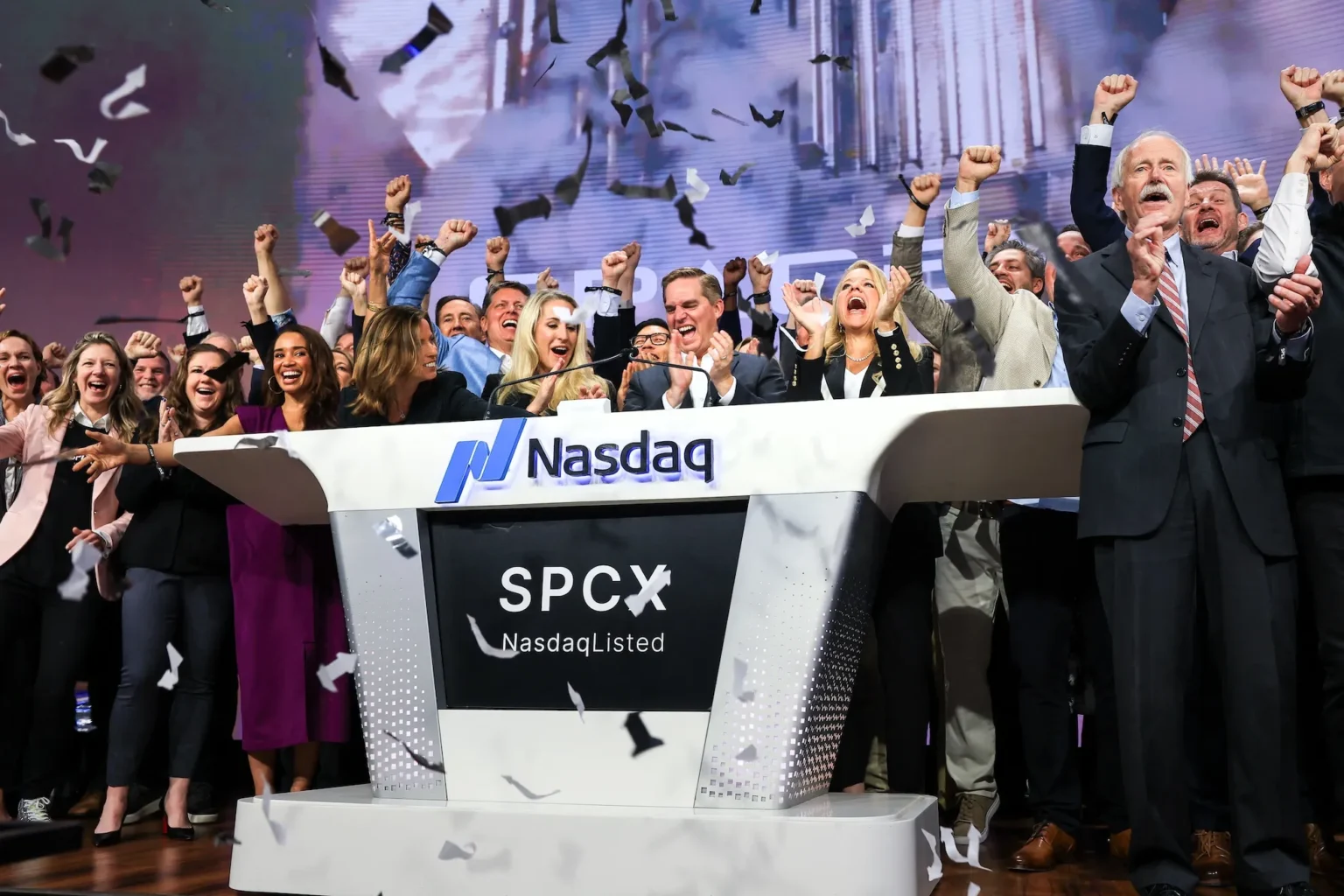

The SpaceX IPO has become a benchmark for OpenAI, Anthropic and the AI companies waiting behind it.
The SpaceX IPO has become the first major test of how much public investors are willing to pay for companies that mix artificial intelligence, infrastructure and founder control. Reuters reported that SpaceX raised $85.7 billion after underwriters exercised an additional share option, lifting proceeds from the $75 billion it raised last week.
An IPO, or initial public offering, lets a private company sell shares to public investors. In SpaceX’s case, the numbers are unusually large. Reuters said the company sold 555.56 million shares at $135 each before the greenshoe option, making it the largest IPO in history even before the extra shares were purchased. The shares rose 19% on their Nasdaq debut, according to Reuters.
The timing matters because other AI companies are moving toward the same door. TechCrunch reported that OpenAI and Anthropic may follow SpaceX into public markets, with its Equity podcast framing the moment as a broader shift from older FAANG-style consumer tech toward AI labs, Nvidia, Google, OpenAI, Anthropic and SpaceX.
Anthropic has already taken a formal step. In a June 1 announcement, the company said it had confidentially submitted a draft S-1 registration statement to the SEC for a proposed IPO. OpenAI said on June 8 that it had also submitted a confidential S-1, while noting that it had not decided on timing.
The SpaceX IPO also shows why investors are treating AI infrastructure as a public market story. TechCrunch, citing SpaceX’s IPO filing, reported that SpaceX generated more than $18 billion in revenue in 2025, lost about $4.9 billion, and directed around 60% of 2025 capital spending to its AI division after absorbing xAI. The same filing described a large future market tied to enterprise AI applications.
That creates both a bullish and skeptical case. Supporters can point to Starlink revenue, reusable rockets and investor demand that Reuters said reached more than $250 billion of orders. Skeptics can point to capital intensity, AI losses, governance concerns and the risk that investors are pricing future businesses before they are proven.
There is also a ripple effect. TechCrunch said some startups are trying to ride the SpaceX IPO wave, including companies pitching orbital data centers and space-linked infrastructure. The AI Decode has also covered how the Google SpaceX compute deal points to rising demand for AI infrastructure beyond traditional data centers.
The next test is whether the SpaceX IPO gives OpenAI, Anthropic and other AI-linked firms a wider opening, or whether it absorbs too much investor attention before their own filings become public.