






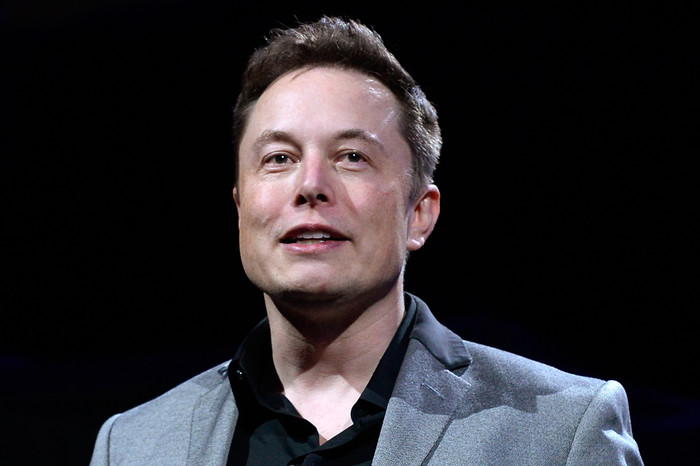

AI GDP growth could reach roughly 4% in the United States, according to Elon Musk, almost twice the Federal Reserve’s current forecast.
Elon Musk believes AI GDP growth could become one of the biggest economic stories of the next year.
The Tesla and xAI chief said on September 18 that artificial intelligence could roughly double the U.S. economic growth rate, pushing it from around 2% to about 4%.
“My guess is that AI roughly doubles US GDP growth next year from ~2% to ~4%. Maybe even more,” Musk wrote on X.
The prediction, reported by Moneycontrol, is far more optimistic than forecasts from the Federal Reserve.
Musk did not publish a detailed economic model behind the estimate. That makes the 4% AI GDP growth figure a personal forecast rather than a consensus projection.
The difference is important.
The Federal Reserve’s latest economic projections put median real U.S. GDP growth at 2.4% for 2027. Individual Fed officials expected growth somewhere between roughly 2% and 2.9%.
A jump to 4% would therefore require a substantial improvement in productivity across one of the world’s largest economies.



The argument behind Musk’s AI GDP growth forecast is fairly simple.
AI can help workers complete some tasks faster.
Software developers can generate and review code more quickly. Customer-service teams can automate routine questions. Office workers can summarise documents, prepare reports and search through large amounts of information in minutes rather than hours.
If millions of workers start producing more during the same working day, national economic output can rise.
That is the productivity case behind AI GDP growth.
The harder part is turning those individual productivity gains into a nationwide economic boom.
Companies still have to buy computing infrastructure, integrate AI into existing software and train workers to use the new systems effectively.
Many businesses are also discovering that buying an AI subscription is much easier than reorganising an entire company around the technology.
That process can take years.
The recent U.S. economic numbers also make Musk’s prediction look aggressive.
Moneycontrol reported that U.S. GDP expanded at an annualised rate of 1.5% in the second quarter, down from 2.1% in the previous quarter.
Those quarterly annualised figures are measured differently from the Federal Reserve’s yearly projections, so they are not directly comparable.
They do, however, show the scale of acceleration needed for AI GDP growth to reach Musk’s target.
One reason for optimism is the enormous amount of money already flowing into AI infrastructure.
Technology companies are spending heavily on Nvidia chips, data centres, networking equipment and electricity.
That spending itself contributes to economic activity.
It also builds the infrastructure required for more companies to use powerful AI systems.
The AI Decode’s coverage of the Google SpaceX compute deal showed just how large the race for computing capacity has become, with Google agreeing to pay SpaceX $920 million a month for access to computing hardware.
If those investments eventually produce substantial productivity gains, the effect on AI GDP growth could become much easier to measure.
There is also a less comfortable side to the forecast.
Economic growth does not automatically mean every worker benefits equally.
A company may become more productive because employees use AI to produce more work. It may also become more productive because it needs fewer workers.
Those two outcomes can both raise productivity statistics while producing very different experiences for employees.
The AI Decode has also examined the scale of AI research funding, showing how governments increasingly see artificial intelligence as an economic competition as much as a technology race.
Another constraint is electricity.
Training and operating large AI systems requires enormous amounts of power. Data centres are already creating new demand on electricity grids in several regions.
Musk himself has warned that power supply could become one of the limits on AI expansion.
That matters because stronger AI GDP growth requires more than better algorithms.
Companies need enough chips, data centres and electricity to run those systems at large scale.
There is also the question of return on investment.
Technology companies are spending hundreds of billions of dollars on AI infrastructure. Investors increasingly want to know whether the revenue generated by AI can justify those costs.
If businesses begin cutting expenses, improving productivity and producing new revenue through AI, Musk’s prediction will look less extreme.
If the technology remains expensive to operate while producing only modest improvements, the AI GDP growth story will look very different.
Musk has a history of making aggressive forecasts about artificial intelligence, robotics and automation.
That does not make a 4% growth rate impossible.
It does mean the number should be treated as an optimistic scenario rather than an established economic forecast.
The Federal Reserve remains much more cautious at 2.4%.
The evidence over the next year will come from productivity statistics, corporate earnings, business investment and employment data.
AI investment is already enormous.
The unanswered question is whether that spending can translate into enough real productivity to make AI GDP growth jump from an interesting theory to something visible across the entire U.S. economy.