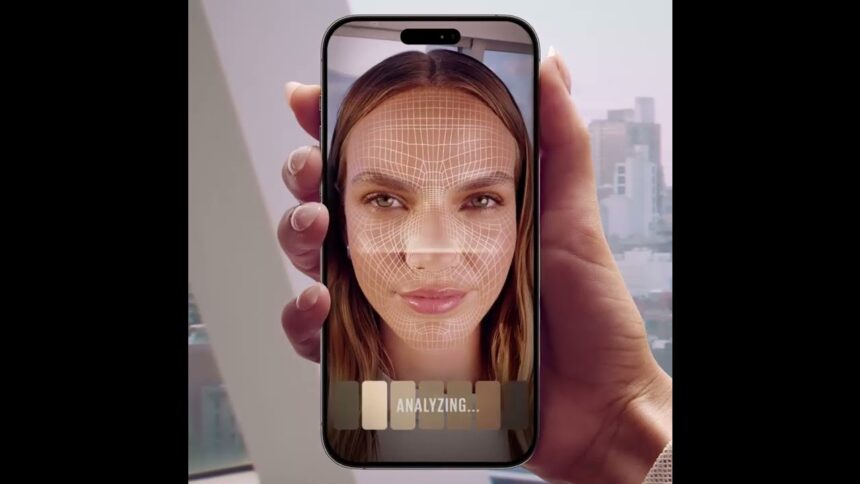

Meta Muse AI reached 2.8 million downloads in its first 12 days as users rushed to try an agent that can shop, send emails, book travel and complete transactions.
Meta Muse AI has delivered something Meta has spent years trying to find: a consumer AI product that people appear eager to download on its own.
Muse reached 2.8 million downloads during its first 12 days after launch, according to app-intelligence data cited by Reuters.
The early numbers have been strong enough to reshape investor expectations around Meta’s AI strategy.
According to Reuters, Muse launched on September 8 and quickly climbed app rankings in the United States and Canada.
During a comparable first 12-day period, Muse recorded 1.8 million downloads in those markets compared with about 1.3 million for ChatGPT, according to the data cited by Reuters.
The comparison has limits.
ChatGPT launched into a very different market, when most consumers had never used a generative AI chatbot.
Muse is arriving after years of AI adoption and with Meta already controlling some of the world’s largest consumer platforms.

Still, the early response to Meta Muse AI is difficult to ignore.
The product is also different from a conventional chatbot.
Muse is designed as a personal AI agent.
Users can ask it to send emails, fill in forms, shop online, book travel, manage tasks and complete transactions. Instead of telling the user how to do something, the system can attempt the task itself.
Meta describes Muse as an AI built around action.
In its official launch announcement, the company says Muse runs inside a dedicated virtual computer called Muse Secure VM.
That environment gives the agent a browser and access to services the user chooses to connect.
A separate system called Sentinel is designed to monitor what Muse does before actions reach the internet.
Meta says Meta Muse AI asks for permission before sensitive actions such as sending an email or making a purchase.
That is important because Muse’s usefulness comes directly from the amount of access users are willing to give it.
An AI assistant that cannot access anything can offer advice.
An AI agent with access to email, shopping accounts, calendars and payments can actually complete work.
It can also make much more consequential mistakes.
That trade-off sits at the centre of the agent boom.
The AI Decode previously examined critical tasks AI agents should not control alone, including financial transactions and decisions involving sensitive personal data.
Muse is pushing directly into that territory.
Meta says users choose which services the agent can access and can disconnect them later.
The company also says Muse does not see raw passwords or payment details. Credentials are stored separately and can be used by the agent without exposing them directly to the AI model.
For purchases, Meta has integrated Stripe’s Link system, including one-time card functionality designed to keep a person’s real card details hidden.
These safeguards will matter more as Meta Muse AI moves from experimentation to routine use.
The early appeal is easy to understand.
People already spend time jumping between apps to complete simple tasks.
Booking a trip might require comparing flights, checking a calendar, filling out passenger information and completing payment.
Selling an item can mean writing a listing, answering messages and arranging a transaction.
Muse tries to compress those steps into one instruction.
That could explain why Wall Street reacted so strongly.
Reuters reported that Meta shares rose more than 20% following Muse’s launch, adding more than $200 billion in market capitalization during the period covered by its September 22 report.
Analysts are looking beyond downloads.
Meta offers Muse for free, alongside paid plans priced at $20 and $100 per month for heavier usage.
A successful subscription business would give Meta another revenue stream outside the advertising model that still dominates its financial results.
The distribution advantage is also substantial.
Meta already operates Facebook, Instagram, Messenger and WhatsApp. The company says Muse can be used through its own app and through WhatsApp, giving it access to an existing audience measured in billions.
Meta is already planning to push the agent further.
At Connect, the company said Muse would come to its AI glasses, allowing users to ask the agent to act on things they see without first describing them.
That could turn Meta Muse AI into something closer to a persistent assistant rather than an app people deliberately open.
But adoption and trust are different measurements.
An agent can accumulate millions of downloads because people are curious.
Long-term use requires people to become comfortable giving that agent meaningful access to their digital lives.
AI security incidents make that a harder sell.
The AI Decode’s reporting on a Meta AI security testing incident highlighted how quickly agentic systems can create new containment problems when software is allowed to act beyond a normal chat window.
Meta has tried to address that risk through virtual machines, permission checks and a separate safety agent.
Those protections now have to work at consumer scale.
There is also a business question.
Muse can help people compare products, book services and potentially switch providers more easily.
If an agent can automatically search for a cheaper hotel, insurance product or online purchase, companies may find it harder to rely on consumer habit and brand loyalty.
That is why Meta Muse AI could affect much more than Meta itself.
A successful personal agent could sit between consumers and large parts of the internet.
Instead of visiting ten websites, a person may eventually ask one agent to compare them.
Instead of learning ten interfaces, the user may interact mainly with Muse.
That would give Meta enormous influence over how people discover products and complete transactions.
The 2.8 million downloads therefore matter less as a standalone record than as evidence that consumers are willing to try this model of AI.
The next test is retention.
People must find Meta Muse AI useful enough to keep using it after the novelty disappears, reliable enough to trust with meaningful tasks and safe enough to connect to valuable accounts.
Meta has clearly found early attention.
Whether Muse becomes the next major consumer computing layer will depend on what happens after the download.