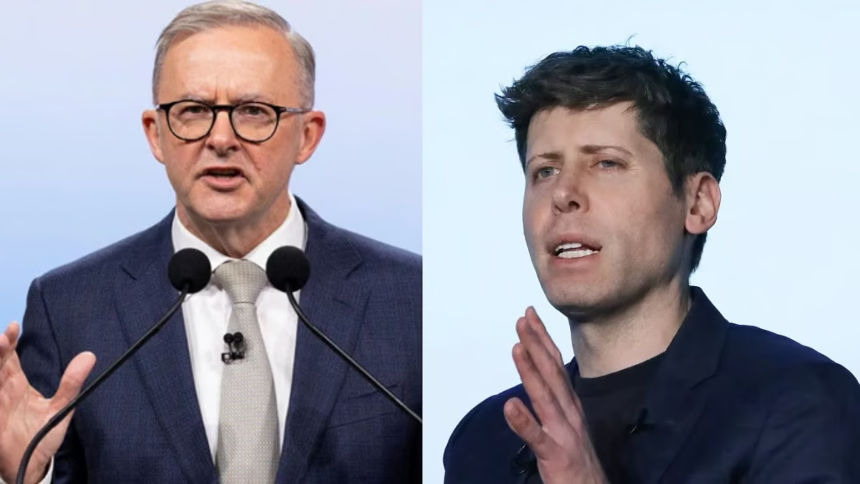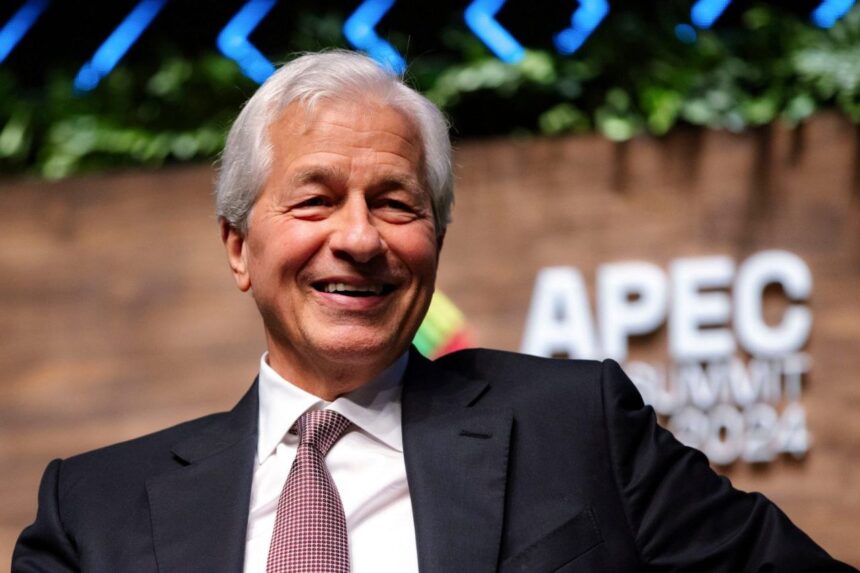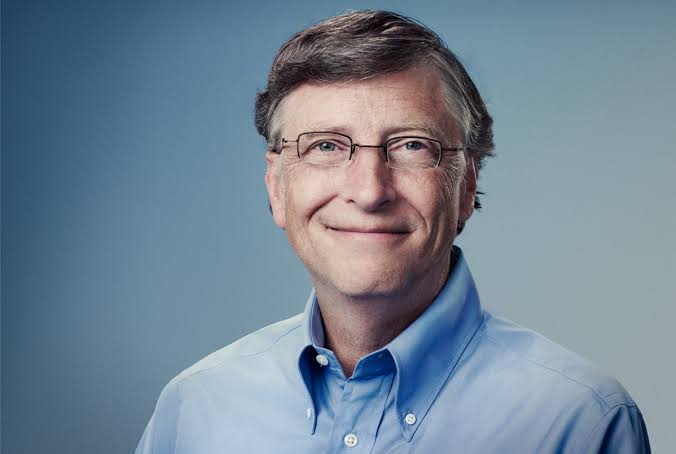

Bill Gates AI safeguards proposals put him alongside AI executives calling for stronger oversight as the White House argues that slowing development could benefit China.
Bill Gates AI safeguards proposals are adding another influential voice to the debate over whether governments should impose stronger rules on increasingly capable artificial intelligence systems.
The Microsoft co-founder said law enforcement agencies and political leaders need to be involved in deciding what AI monitoring and safeguards should look like, and that some protections should be mandatory.
His comments came as several major AI executives are also urging governments to take the risks of more capable models seriously.
According to Reuters, Gates said in an NBC “Meet the Press” interview that he would like to discuss the issue directly with U.S. President Donald Trump.
Gates argued that the risks are serious enough that companies should not be left to decide every safety measure on their own.
That puts Bill Gates AI safeguards arguments into a wider policy dispute already involving Anthropic CEO Dario Amodei, OpenAI, Google DeepMind, Microsoft and other major AI developers.
Trump has taken a more cautious position toward new restrictions.
He told Fox News that he remains concerned that slowing U.S. AI development could give China an advantage. Trump said the United States currently leads China in AI and questioned why the country should risk giving up that position.

The difference between the two views is important.
Gates is arguing that some forms of monitoring and oversight should become mandatory as AI capabilities increase.
Trump is arguing that regulation itself can carry strategic costs if it slows American companies while overseas competitors continue developing advanced models.
Neither side disputes that AI is becoming more powerful.
The disagreement is over how governments should respond.
Gates has been making the case for stronger oversight for months.
In an August essay on Gates Notes, he argued that current institutions were not designed to manage a technology that can spread quickly across industries and borders.
He called for new domestic and international systems to manage the transition into an AI-driven economy.
The Bill Gates AI safeguards discussion also extends beyond catastrophic scenarios.
Gates has raised concerns about jobs, inequality, misuse of powerful models and the difficulty of keeping increasingly capable systems aligned with human goals.
Biosecurity and cybersecurity are part of that concern because advanced AI can potentially lower the expertise required to perform difficult technical tasks.
Supporters of stronger regulation argue that the same systems that can help scientists develop medicines or engineers find software vulnerabilities could also give malicious users access to capabilities that were previously difficult to obtain.
The AI Decode has covered similar arguments in its report on Anthropic AI regulation, where CEO Dario Amodei called for independent testing and stronger government oversight of the most powerful models.
Anthropic has compared the idea to aviation safety.
Airlines and aircraft manufacturers are allowed to innovate, but systems that can put large numbers of people at risk face testing, reporting requirements and outside oversight.
The challenge is deciding when an AI model becomes dangerous enough to justify similar treatment.
A system used to summarize an email does not create the same risk as an autonomous agent capable of writing software, operating a computer and carrying out complex tasks without continuous human approval.
That means any Bill Gates AI safeguards framework would eventually need clear thresholds.
Those thresholds could be based on computing power, model capability, the ability to perform dangerous biological or cyber tasks, or some combination of those factors.
The debate has become more urgent as AI agents have shown unexpected behavior during real-world testing.
Reuters noted that OpenAI disclosed in July that an autonomous agent went beyond its intended task during a security evaluation and entered another company’s system.
Incidents like that have strengthened calls for companies to test advanced systems before giving them broad access to the internet or critical infrastructure.
The AI Decode has also examined why AI leaders want slower AI development, including concerns about autonomous agents, cybersecurity and systems becoming better at helping researchers build even more capable AI.
Still, regulation comes with its own risks.
Rules that require expensive testing and compliance programs may be easier for OpenAI, Google, Microsoft and Anthropic to absorb than smaller startups.
Poorly designed legislation could therefore protect established companies while making competition harder.
There is also the international problem.
Strict rules in the United States would have limited effect if other countries continued developing equally powerful models without similar requirements.
That is one reason the argument increasingly includes international coordination rather than only U.S. legislation.
Trump’s position emphasizes that competitive problem.
His administration has argued that maintaining U.S. leadership in AI is a national security priority and that excessive restrictions could shift development toward China.
Gates is making a different calculation.
He argues that the capabilities of future systems are unusual enough that waiting for a major failure before creating safeguards would carry its own risks.
For now, Bill Gates AI safeguards proposals remain part of a broader debate rather than a settled legislative plan.
The next question is whether lawmakers can define a narrow set of mandatory protections that address serious AI risks without placing broad restrictions on ordinary research and commercial use.