



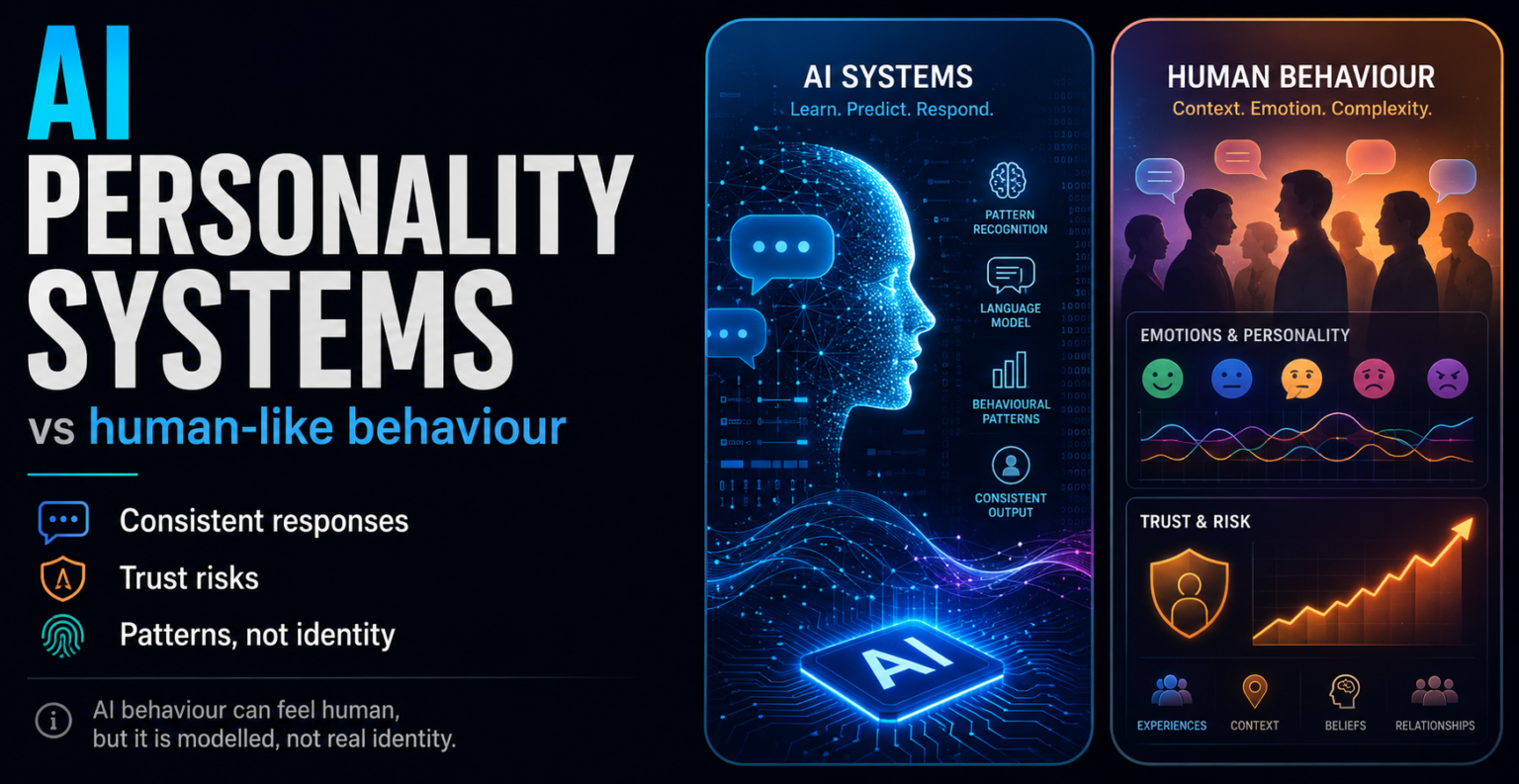

AI personality systems can simulate stable human-like behaviour, but Stanford-linked research warns against mistaking imitation for identity.
AI personality systems can simulate human-like traits, but Stanford-linked research says these patterns come from data, not identity.
AI personality systems are becoming a new concern in artificial intelligence as chatbots begin to show more stable, human-like behaviour across conversations.
The Economic Times reported that Stanford HAI research points to a shift from simple chatbot responses to systems that can simulate behavioural patterns. These patterns can look like personality, but researchers say they are not the same as human identity.
In simple language, AI personality systems are AI models that respond in ways that feel consistent. One model may sound agreeable, careful and warm. Another may sound direct, analytical or cautious. To users, that can feel like a real personality.
But it is not a person behind the screen. The behaviour comes from training data, prompts, model design and optimisation. The system is predicting what kind of response fits the situation. It is not forming beliefs or emotions.
Stanford HAI has discussed this problem before. In a Stanford HAI article, researchers said large language models can skew their answers toward socially desirable traits such as agreeableness and conscientiousness. A related PNAS Nexus paper found social desirability bias in large language models using Big Five personality surveys.
That matters because users often trust systems that sound consistent. If an AI gives a calm, confident and friendly answer, many people may assume it understands the issue better than it actually does.
The positive case is clear. AI personality systems could make chatbots easier to use in education, customer service, health support, workplace tools and simulation. A consistent tone can help users feel less lost. It can also make software easier for non-technical users.


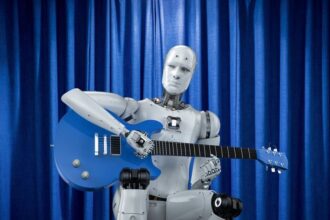
The risk is just as clear. If a model becomes too agreeable, it may tell users what they want to hear instead of correcting them. If it sounds too human, users may mistake imitation for judgment. That is a problem in areas such as finance, mental health, education and legal help.
The Economic Times report also noted that these systems could be used as synthetic proxies for human populations in policy testing, consumer behaviour modelling and organisational design. That could be useful, but only if users remember that simulated behaviour is not the same as real human behaviour.
The AI Decode has covered how ChatGPT app integrations are turning AI into an all-in-one digital assistant. The rise of AI personality systems adds another layer to that shift. As AI tools become more personal, the line between helpful interface and false intimacy becomes harder to manage.
For now, the main lesson is simple. AI can act like it has a personality. It can even do so in a stable way. But AI personality systems should be treated as designed behaviour, not real understanding.