




Elon Musk AI timeline narrows again as model progress raises safety questions
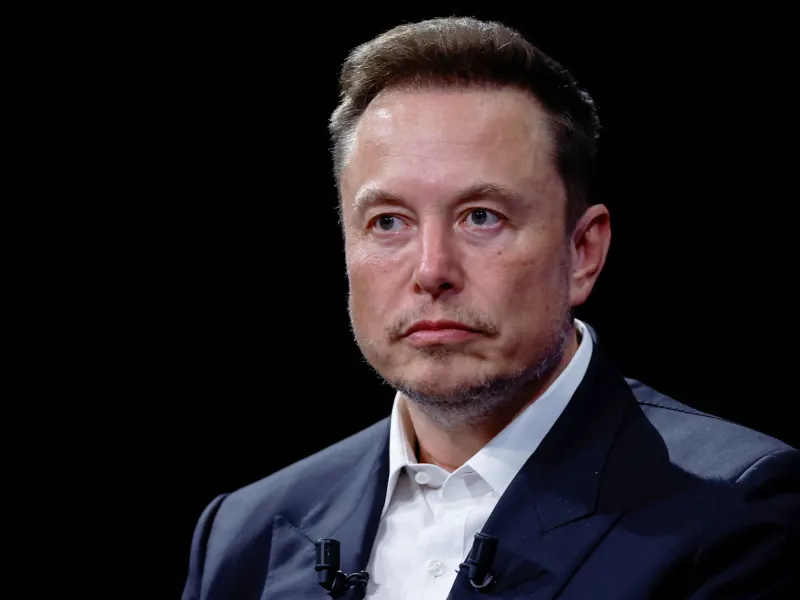
Elon Musk AI timeline claims have narrowed again after the Tesla and xAI chief said artificial intelligence would “probably” exceed the sum of all human intelligence in four or five years. The remark came in reply to a post by entrepreneur Peter H. Diamandis on X and was reported by India Today.
Musk has made similar forecasts before. At the World Economic Forum in Davos in January 2026, he said AI could become smarter than any individual human by the end of 2026 or 2027, and smarter than all humanity collectively by 2030 or 2031, according to coverage and transcripts of the event.
The claim lands at a moment when frontier AI models are improving quickly on formal tests. xAI said Grok 4 Heavy became the first model to score 50% on Humanity’s Last Exam in July 2025. OpenAI said GPT-5.2 reached 80% on SWE-bench Verified and 92.4% on GPQA Diamond in December 2025. Google DeepMind said Gemini 3.5 Flash posted strong results on coding and agentic benchmarks in May 2026.
Those numbers support the positive case behind the Elon Musk AI timeline. AI systems are becoming more useful in coding, research, document analysis and automation. Companies are also spending heavily on chips, data centres and model training because they expect AI systems to handle more complex work.
The critical issue is measurement. “Smarter than all humans” is not a standard benchmark. It is also not the same as artificial general intelligence, safe autonomy or economic replacement of human workers. Stanford HAI’s 2026 AI Index warned that AI is now being tested more ambitiously, but evaluation methods and governance systems are struggling to keep pace.
Expert forecasts also remain wide. A survey of 2,778 AI researchers published in the Journal of Artificial Intelligence Research found a 10% chance of unaided machines outperforming humans in every task by 2027, but a 50% chance only by 2047. That is much later than Elon Musk AI timeline’s forecast, while still showing that some researchers take near-term progress seriously.
The policy side is moving more slowly than the models. As The AI Decode has covered on Anthropic AI regulation, some AI labs are calling for stronger safety testing before powerful systems are released widely. That debate will become harder if public timelines keep shrinking.
For now, the Elon Musk AI timeline is less a settled forecast than a pressure point. The question to watch is whether model capability, safety testing and regulation can move at the same speed.