






Google is moving Display Ads into Google Demand Gen as ad platforms lean more on automated tools and mixed creative formats
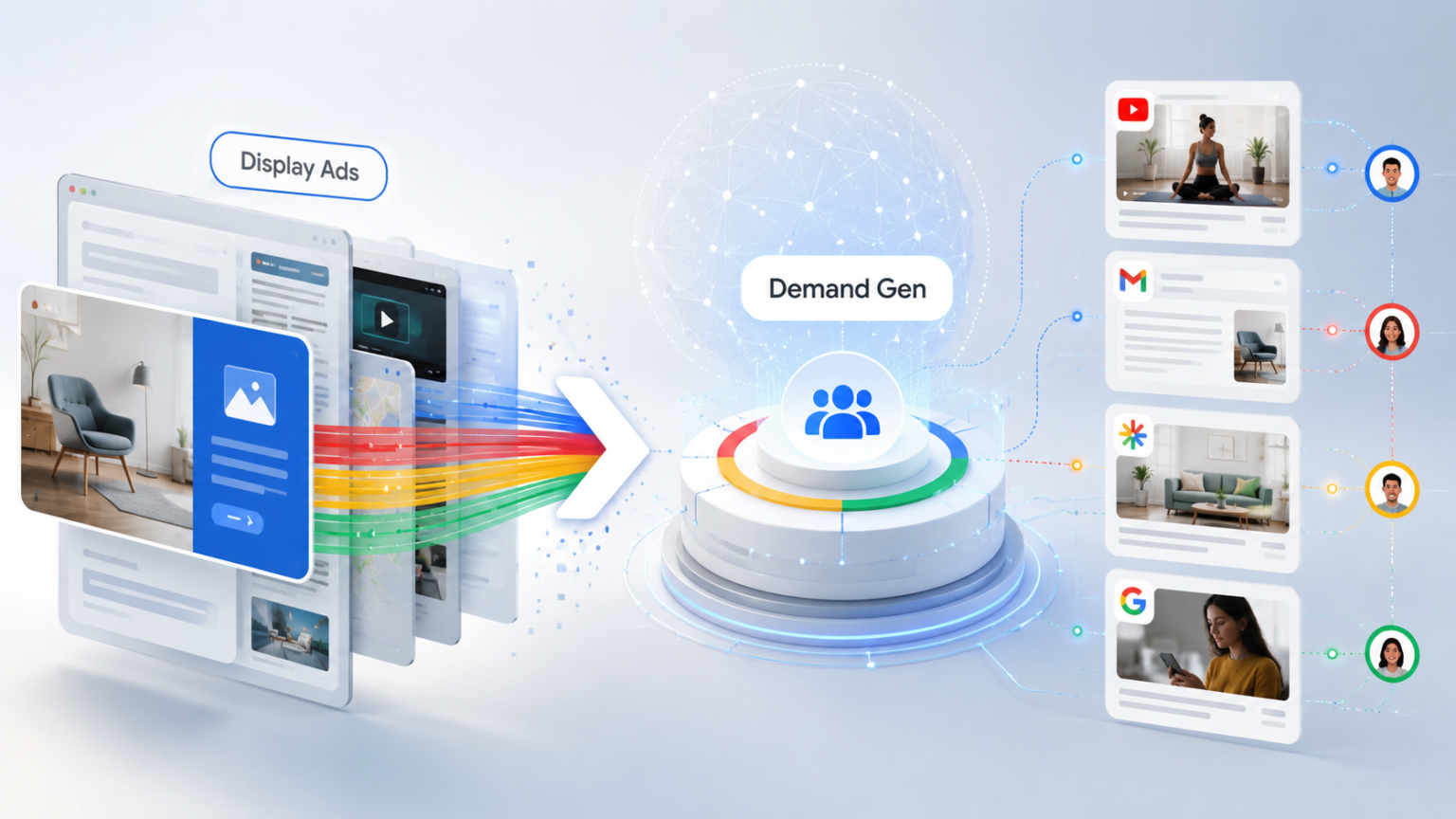
Google is moving its old Display Ads setup into Google Demand Gen, a change that will affect how advertisers run banner, image and video campaigns across Google’s ad network.
The move does not mean the Google Display Network is shutting down. Google says advertisers can still run ads on GDN, which reaches more than 2 million sites, videos and apps. But the buying process is now being pulled into Demand Gen, where campaigns can also run across YouTube, Shorts, Discover, Gmail and Maps.
The shift starts in June 2026. Google says eligible advertisers will get a migration tool, with the wider move expected to finish by 2027. In practice, brands that once built Display campaigns around placements and manual bidding will now work inside a more automated campaign type.
Google’s pitch is simple. Advertisers add images, videos, headlines and goals. The system then tests formats and placements across Google’s visual inventory. According to Google, advertisers that added GDN inside Demand Gen saw a 9.5% average rise in ROI. Google also cited GoFood, which reported a 24% fall in cost per acquisition and 19% more conversions after adding GDN.
That sounds useful, but buyers will want to test it with their own budgets. The figures come from Google’s own data, so agencies are unlikely to treat them as final proof. There is also a trade-off. Google Demand Gen may save time, but it gives the platform more control over where money goes.
Some campaign tools will also change. Google Ads Help says manual CPC, viewable impressions bidding and pay-for-conversions are not supported in Demand Gen. Placement reporting and channel reporting are supported, which should help buyers track where ads appear.
This comes after Gemini 3 Flash became the default AI model in its app. The change fits a wider ad market pattern. Reuters reported in 2025 that Meta also wanted brands to create and target ads with AI tools by the end of 2026.
For advertisers, the next year will be about testing. Google Demand Gen could make campaign work faster. It could also make ad buying feel less transparent for teams used to tighter manual control.