



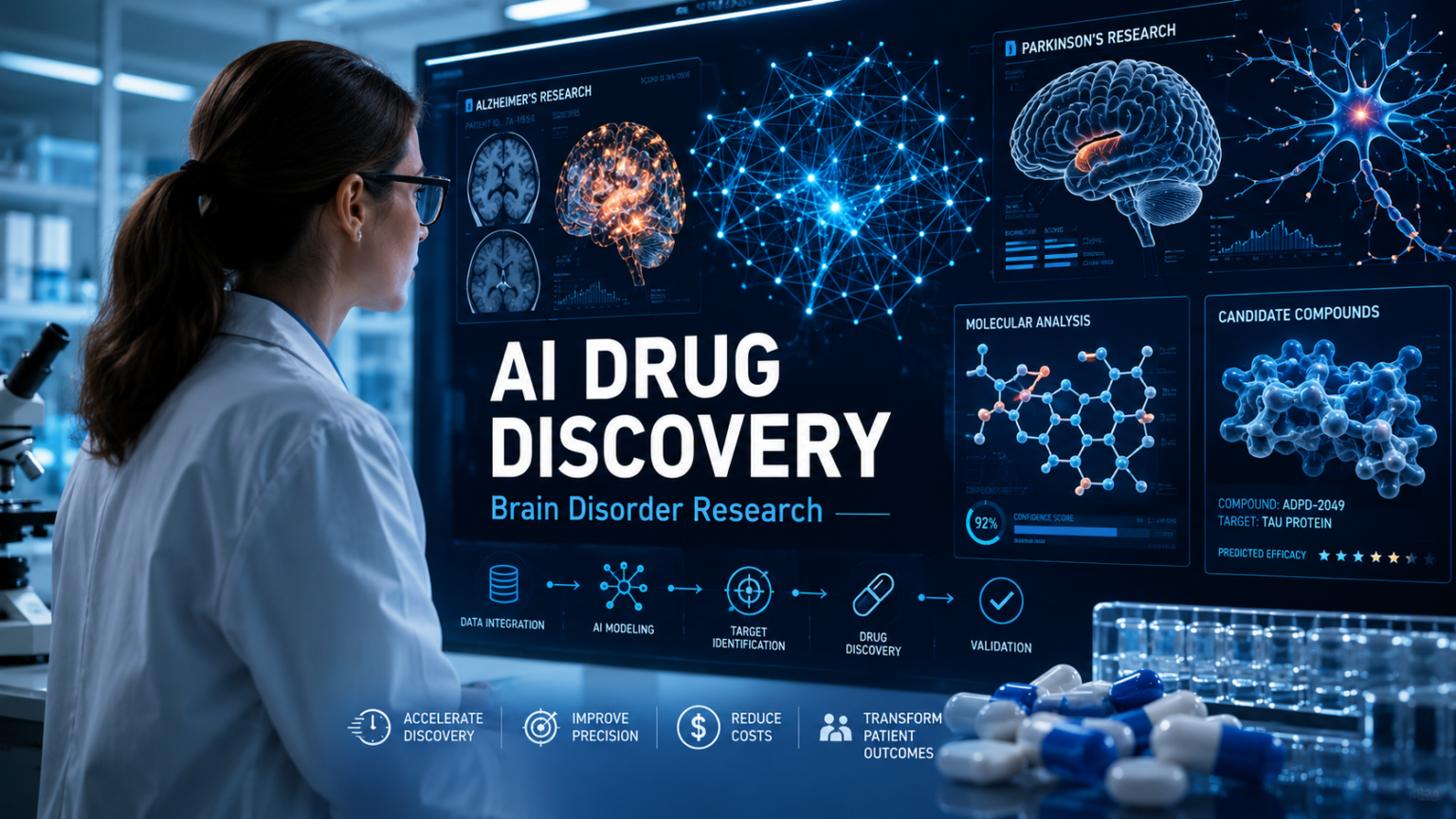

AI drug discovery is moving deeper into brain disorder research as scientists look for faster ways to find treatments for Alzheimer’s, Parkinson’s, dementia and motor neurone disease.
The Economic Times reported that researchers are using AI to study large sets of patient and biological data. These datasets can include brain scans, genetic data, patient records, voice recordings and laboratory results. The aim is to spot patterns that may help researchers find treatment routes earlier.
Traditional drug development for neurological disorders is slow and costly. Many possible drugs fail during testing. That has made brain health one of the harder areas for medicine. AI drug discovery does not remove that risk, but it can help researchers narrow the list of possible drug candidates before expensive lab and clinical work begins.
One important use case is drug repurposing. In drug repurposing, scientists test whether an existing medicine can help treat another condition. AI drug discovery can compare disease pathways, symptoms, molecular behaviour and patient data faster than older manual methods. That could help researchers find links that may otherwise take years to detect.
A 2025 Nature Communications review said repurposed drugs can be useful in Alzheimer’s disease and other neurodegenerative disorders because they already have some safety and dosing data from earlier use. The same review noted that computational methods, drug databases and electronic health records can help identify possible candidates.
There is also active research in Parkinson’s. A 2024 npj Parkinson’s Disease paper said AI models and federated data analysis could support better drug development by helping researchers work across large datasets while protecting patient data.
Still, AI drug discovery is not a shortcut to approved medicines. The Economic Times noted that AI does not replace clinical trials, lab testing or regulatory review. A drug found through AI still needs proof that it is safe and effective in patients.
The promise is speed, not certainty. AI drug discovery may help scientists ask better questions, test better candidates and avoid some dead ends. But the final decision still belongs to biology, doctors, regulators and patient data.
The AI Decode has covered how AI infrastructure jobs are growing outside traditional tech roles. Healthcare may become another area where AI shifts work beyond software, into labs, hospitals and research networks.



For now, AI drug discovery is a useful tool in brain disorder research. Whether it can deliver better treatments for Alzheimer’s and Parkinson’s will depend on evidence from real studies, not software claims.