






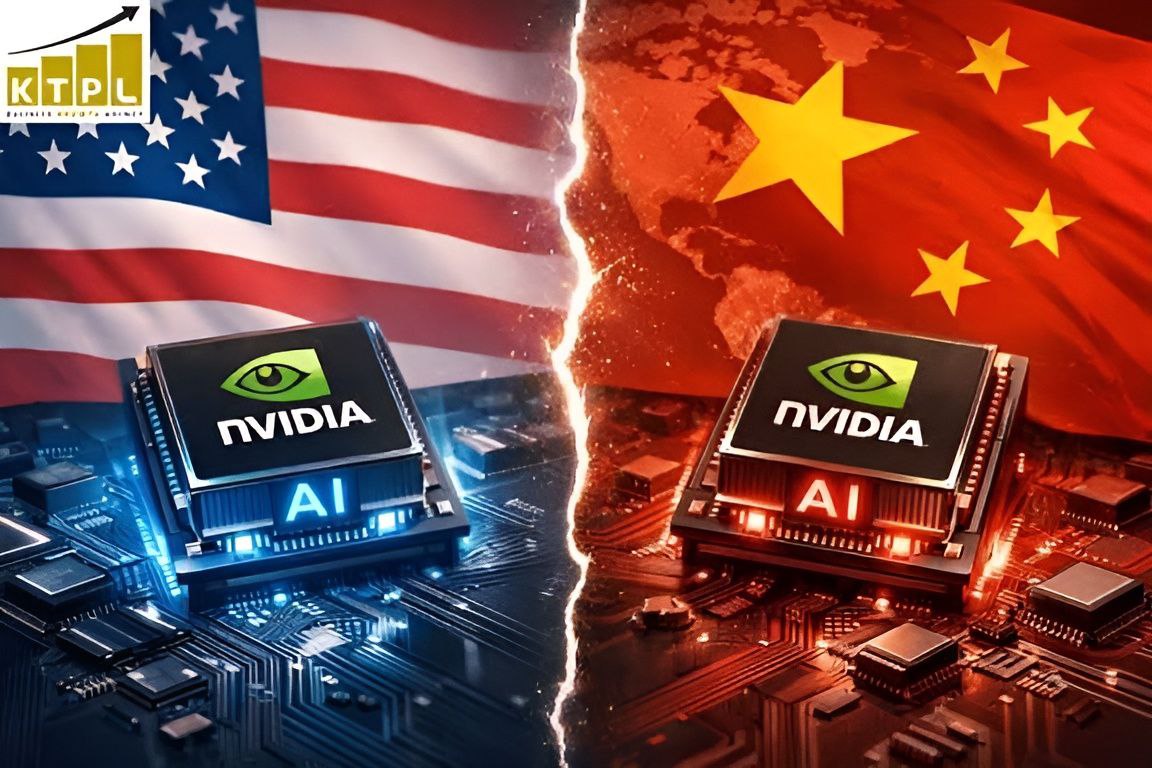

The U.S. has launched a review of Nvidia AI chip sales to China, examining security risks, export controls, and the impact on global AI and semiconductor markets.
The U.S. review of Nvidia AI chip sales to China marks a significant and controversial shift in Washington’s technology export policy.
The federal government has launched an inter-agency licensing review that could allow limited exports of Nvidia’s advanced AI chips, including the H200 processor, to Chinese buyers.
The review is being coordinated by the U.S. Commerce Department, with input from the State, Defense, and Energy Departments.
Agencies have a 30-day window to assess whether exporting these Nvidia AI chips aligns with national security interests.
Reports suggest the policy may include a 25% government fee on approved sales, making it both a strategic and economic decision.
Supporters argue that easing restrictions on Nvidia AI chip sales to China could help U.S. companies remain globally competitive while preventing China from accelerating domestic chip alternatives.
Critics, however, warn that advanced AI processors could enhance China’s military and surveillance capabilities, posing long-term risks.
Export controls on high-end semiconductors have been a cornerstone of U.S. efforts to slow China’s AI and defense advancements. This review signals a possible recalibration, balancing economic opportunity with national security concerns.