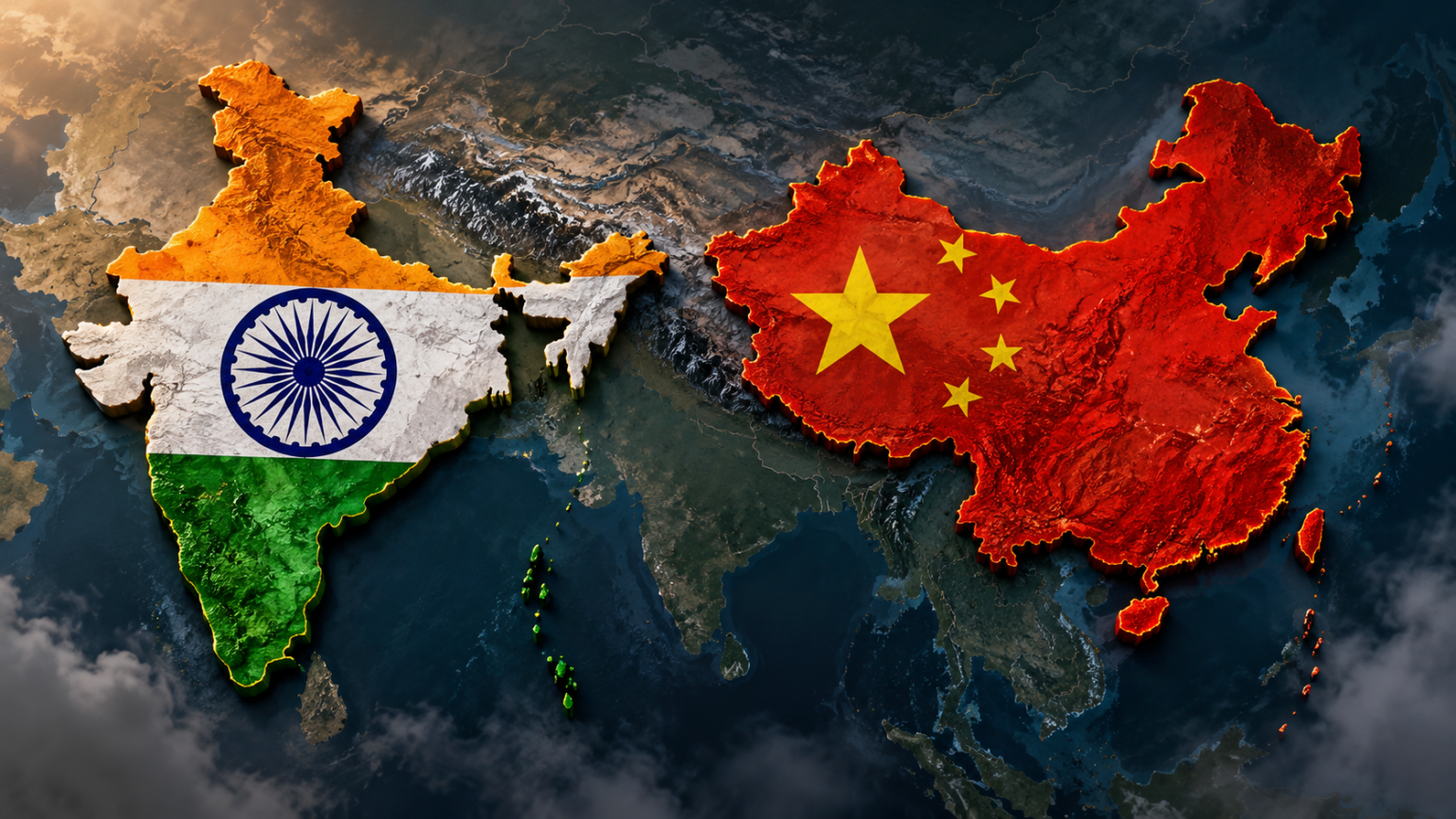

The AI trade boom lifted global commerce far above its non-AI growth rate, according to the IMF, while also creating new supply-chain and financial risks.
The AI trade boom has become one of the strongest drivers of global commerce, helping China, India and other Asian economies grow faster than they otherwise would have, according to the International Monetary Fund.
Global trade increased 8.3% between 2023 and 2025, IMF Chief Economist Silvana Tenreyro said at the IMF and World Bank annual meetings in Bangkok.
Without AI-related trade, growth would have been only 4.6%.
According to Reuters, trade linked to artificial intelligence expanded by about 29% over the same period.
That difference shows how heavily the global economy has started to lean on semiconductors, servers, networking equipment and other infrastructure needed to train and run AI systems.
AI trade boom is benefiting Asian exporters
The AI trade boom is particularly important for Asia because the region sits at the centre of several critical technology supply chains.
China remains a major manufacturer of electronics and data-center equipment.
India is expanding semiconductor manufacturing and AI infrastructure while also benefiting from demand for digital services.



South Korea and Taiwan are also large exporters of advanced chips and related hardware.
That helps explain why the IMF says Asian economies have received a disproportionate share of the growth linked to AI demand.
The IMF’s latest World Economic Outlook projects global growth of 3.1% in 2026 and 3.4% in 2027.
The Fund says countries benefiting from AI investment or favourable trade conditions are performing better than economies facing high energy costs and weaker domestic demand.
The AI trade boom therefore has become large enough to influence the broader global growth picture.
Hardware demand is doing much of the work
Much of the current AI trade surge comes from physical infrastructure rather than software subscriptions.
Advanced AI requires large numbers of processors, servers, memory chips, networking systems and power equipment.
The World Trade Organization recently said trade in AI-related products, including semiconductors and data-center equipment, increased sharply this year.
That means the economic effect of the AI trade boom is visible in factories and ports as well as cloud computing.
The AI Decode recently examined the scale of this infrastructure push in its report on AI spending, where one economic model estimated that AI infrastructure could require trillions of dollars of investment over the coming years.
That spending creates export opportunities for countries that produce the hardware.
It also creates a risk if demand slows.
IMF warns supply chains are highly concentrated
The IMF is not treating the AI trade boom as an uncomplicated success.
Tenreyro warned that AI supply chains remain highly concentrated.
A relatively small number of companies and countries control advanced chip manufacturing, critical semiconductor equipment and some of the most important cloud infrastructure.
That concentration can make the system vulnerable.
A disruption at a major chip plant or a change in export restrictions can affect companies worldwide.
Cybersecurity is another concern.
As AI infrastructure becomes more valuable, data centers, cloud networks and chip supply chains become more attractive targets for attackers.
The IMF also warned that a sharp correction in AI investment could weaken trade growth.
That possibility matters because current spending assumes demand for computing power will continue rising quickly.
China and India benefit in different ways
China and India are both gaining from the AI trade boom, but their advantages are not identical.
China has a deep manufacturing base and is investing heavily in domestic chips, robotics, servers and industrial AI.
The AI Decode recently covered China’s AI guidelines, which call for more AI use across manufacturing while warning local governments against wasteful investment and technology bubbles.
India’s role is expanding through electronics manufacturing, data centers and technology services.
The IMF has also pointed to India’s growing semiconductor ambitions, including Tata Electronics’ plans for an AI-enabled manufacturing facility.
That could increase India’s share of the physical AI supply chain over time.
At the same time, India already benefits from a large technology services industry that can adopt AI across software, consulting and business operations.
The AI trade boom therefore reaches both countries through different parts of the value chain.
AI may boost productivity later
The immediate economic effect of AI comes mostly from investment and trade.
The longer-term question is productivity.
The IMF estimates that AI could eventually raise global annual potential growth by around 0.1 to 0.8 percentage points.
That range is wide because economists still do not know how much companies will gain from automation or how quickly workers and businesses will adapt.
If productivity rises significantly, the enormous investment behind the AI trade boom may be easier to justify.
If productivity gains remain modest, companies may struggle to earn enough revenue from the infrastructure already being built.
That could lead to lower investment, weaker chip demand and slower trade growth.
AI trade boom may not last at the same pace
The IMF’s base case assumes the current AI surge will eventually cool.
That does not mean AI-related trade disappears.
It means growth rates of nearly 30% are difficult to sustain indefinitely.
Once major data centers are built and companies have accumulated enough computing capacity, infrastructure spending may grow more slowly.
The AI trade boom could then depend more on software usage and productivity rather than repeated waves of hardware construction.
The IMF also sees inflation as a risk.
AI data centers use large amounts of electricity. Strong demand for power, construction materials and chips can push up costs before productivity gains arrive.
That creates a complicated economic effect.
AI investment can raise growth in the short term while also adding inflation pressure.
The next test is whether productivity catches up
The AI trade boom has already changed international trade flows.
The IMF’s numbers suggest global commerce would have grown far more slowly without AI-related demand.
China, India and other Asian economies are among the clearest beneficiaries because they supply much of the hardware, manufacturing capacity and technology services behind the buildout.
The unanswered question is whether that investment eventually produces enough productivity and revenue to support the scale of spending.
If it does, AI could remain a long-term source of economic growth.
If it does not, today’s trade surge could prove much more temporary.
For now, the AI trade boom is doing something that few technologies manage so quickly: showing up clearly in global trade statistics, national growth numbers and the economic outlook of some of the world’s largest economies.