




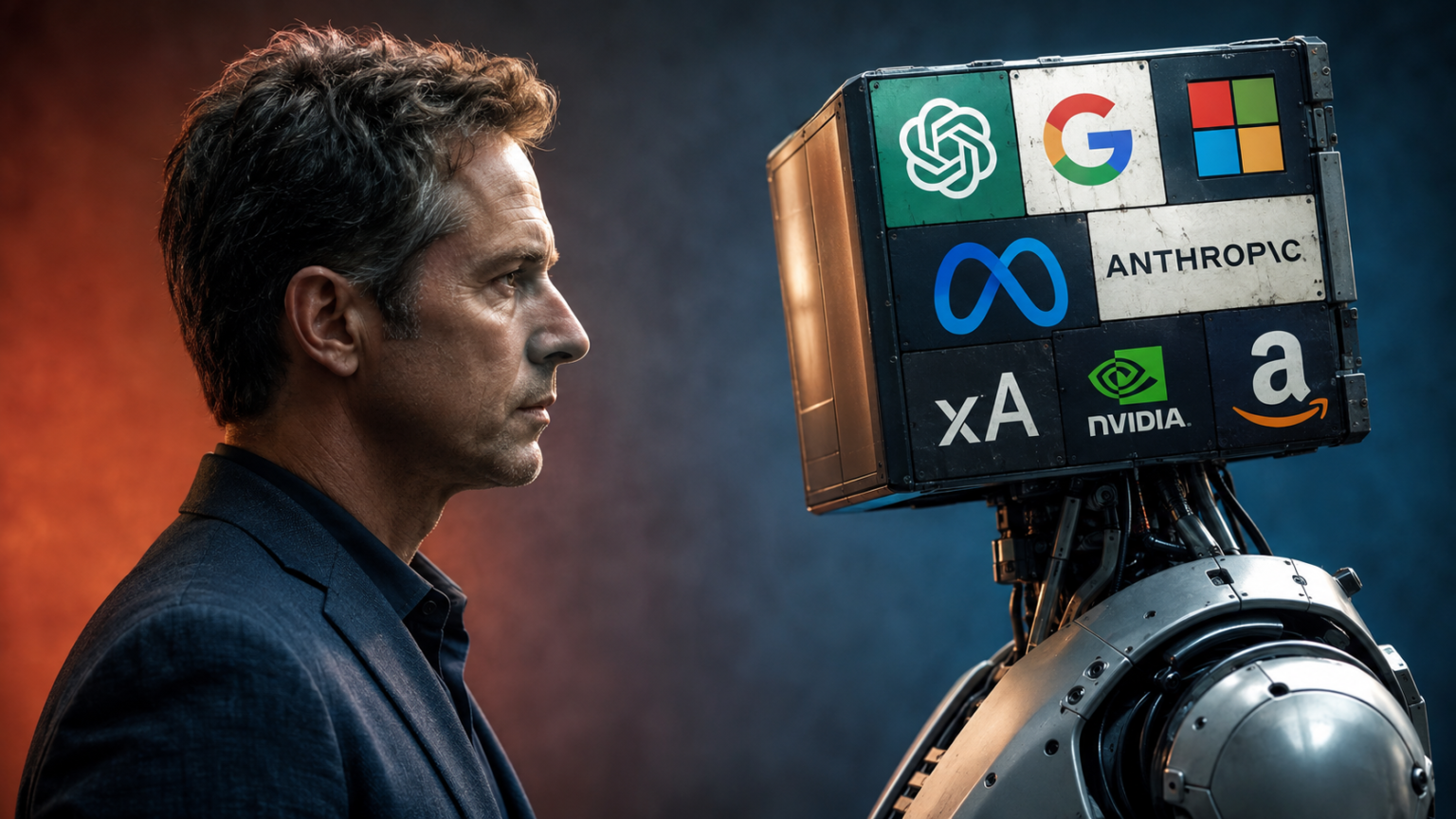

AI and jobs are colliding fastest in work built around screens, documents, routine requests and repeatable decisions.
You probably do not need a robot to take your job.
A software tool that handles half your daily tasks may be enough to change it.
That distinction matters. Much of the public debate around AI and jobs has focused on mass unemployment. The evidence so far points to something less dramatic, but much closer to home: familiar roles are being broken into smaller tasks, and the easiest tasks are being handed to software.
A May 2025 study from the International Labour Organization found that one in four workers worldwide has a job with some exposure to generative AI. The ILO said job transformation is more likely than full replacement because most roles still require human input.
The people under the most immediate pressure are those whose working day already happens inside email, spreadsheets, documents, websites and support systems.
Here are seven AI and jobs flashpoints likely to appear first.
1. Data entry clerks
Data entry is almost designed for automation.
The work often involves moving information from a form, invoice or email into another system. AI tools can now read documents, identify useful details and place them into the correct fields.


Humans will still be needed when the information is missing, unclear or wrong. But companies may need fewer people for the basic copying and checking.
The skill that matters: spotting errors that look believable.

2. Administrative assistants
Scheduling meetings, writing routine emails, organising notes and preparing simple reports now take far less time with AI.
That does not erase the job. It changes what employers expect from it.
An assistant who once spent hours arranging calendars may be asked to manage projects, handle sensitive communication or solve last-minute problems instead. The routine work shrinks. The judgement-heavy work remains.
The ILO lists administrative and clerical roles among the occupations with the highest exposure to AI.

3. Customer support agents
Basic customer questions are already being handled by automated chat systems.
People asking about delivery dates, password resets, return policies or account balances may never reach a human agent. The difficult cases still will.
That means support workers may spend less time answering easy questions and more time dealing with angry customers, unusual problems and situations where the automated answer failed.
This part of AI and jobs may feel less like replacement and more like every easy call disappearing from the queue.

4. Bookkeepers and junior finance staff
AI can sort expenses, match invoices, flag unusual payments and prepare early drafts of financial reports.
The AI Decode has reported how enterprise AI tools are moving deeper into finance, tax, legal and operations teams.
A tool can process hundreds of transactions quickly. It cannot take responsibility when the numbers are wrong.
Workers who understand why a figure looks suspicious will have more value than those who only know where to enter it.

5. Junior copywriters and content assistants
Simple product descriptions, basic promotional emails and first drafts of social posts can now be produced in seconds.
That puts pressure on entry-level work, especially when companies care more about volume than originality.
The weak point is quality. AI can repeat incorrect claims, copy tired phrases and produce writing that sounds confident without saying much. Editors who can verify facts, understand an audience and turn rough material into clear copy will still be needed.
The AI and jobs debate is especially sharp here because writing is easy to generate and difficult to judge well.

6. Graphic designers doing routine production work
AI image tools can create quick concepts, resize campaign material, remove backgrounds and produce dozens of visual options.
The World Economic Forum included graphic designers among roles facing decline in its Future of Jobs Report 2025. The report drew on responses from more than 1,000 employers representing over 14 million workers.
That does not mean design disappears. Clients still need someone to understand the brief, protect the brand and decide which image communicates the right message.
The vulnerable work is fast, repetitive production. The safer work involves taste and responsibility.

7. Junior software developers
AI can already write small pieces of code, explain errors, prepare tests and suggest fixes.
Newer tools can also keep checking projects and submit proposed changes. The AI Decode has covered how AI coding loops are moving software work from one-off requests toward recurring automated tasks.
Junior developers may write less basic code by hand. They will still need to understand what the code does, where it can fail and whether it solves the correct problem.
A company does not benefit from faster code if nobody notices that it is wrong.

The 5 skills that will still matter
The safest response to AI and jobs is not learning one fashionable tool. Products change too quickly. Strong workers need skills that transfer when the software changes.
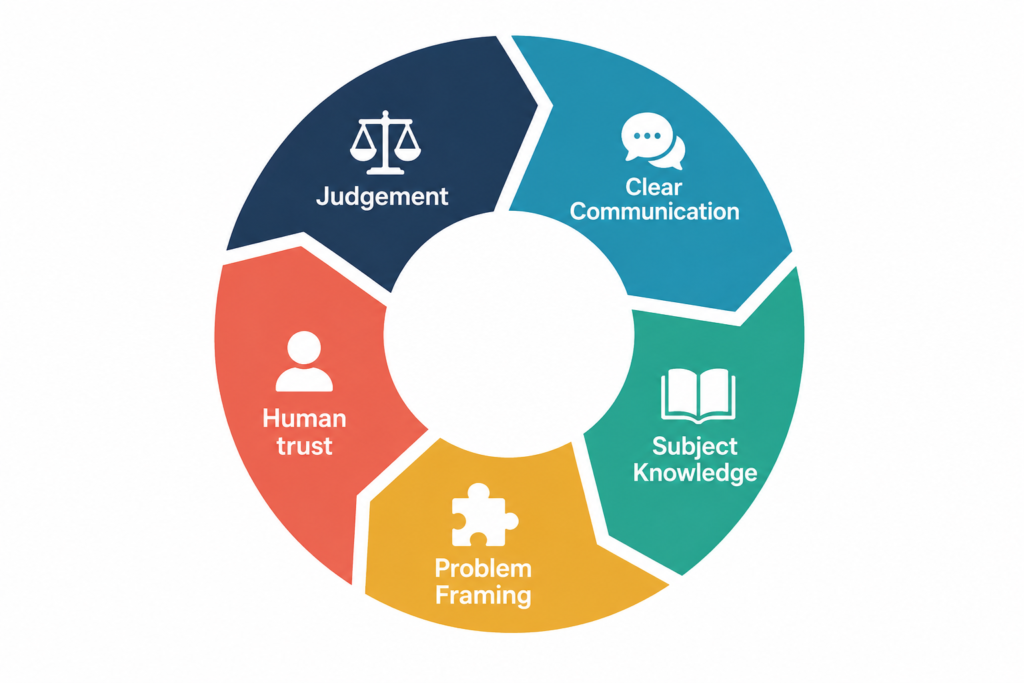
1. Judgement
AI can produce an answer. Someone still has to decide whether that answer is useful, safe or completely wrong.
2. Clear communication
Workplaces still depend on people who can explain a problem, ask a precise question and give difficult information without causing confusion.
3. Subject knowledge
A finance worker who understands accounting can catch a bad result. A marketer who understands customers can reject weak copy. Tools are more useful when the person operating them knows the field.
4. Problem framing
Software works best when the task is clear. People who can identify the actual problem will usually get better results than those who simply type longer instructions.
5. Human trust
Customers, patients, managers and co-workers often want a person to take responsibility. Empathy, negotiation and calm decision-making matter most when a situation becomes messy.
The World Economic Forum estimates that 59 out of every 100 workers will need training by 2030. It also expects creative thinking, resilience, flexibility and curiosity to grow in importance.
That is the less frightening side of AI and jobs. Technology can remove boring tasks and give workers more time for decisions that require context.
The risk is that companies may cut junior roles before creating a serious path for people to gain that context.
A workplace cannot keep its experienced staff forever. It needs beginners who can learn, make small mistakes and gradually take on harder work.
That is what employers should watch next. AI may handle the first draft, the basic request and the routine check. Someone still needs to know when the easy answer is not good enough.