







EU AI transparency rules now cover chatbots, deepfakes and disputed AI consciousness claims
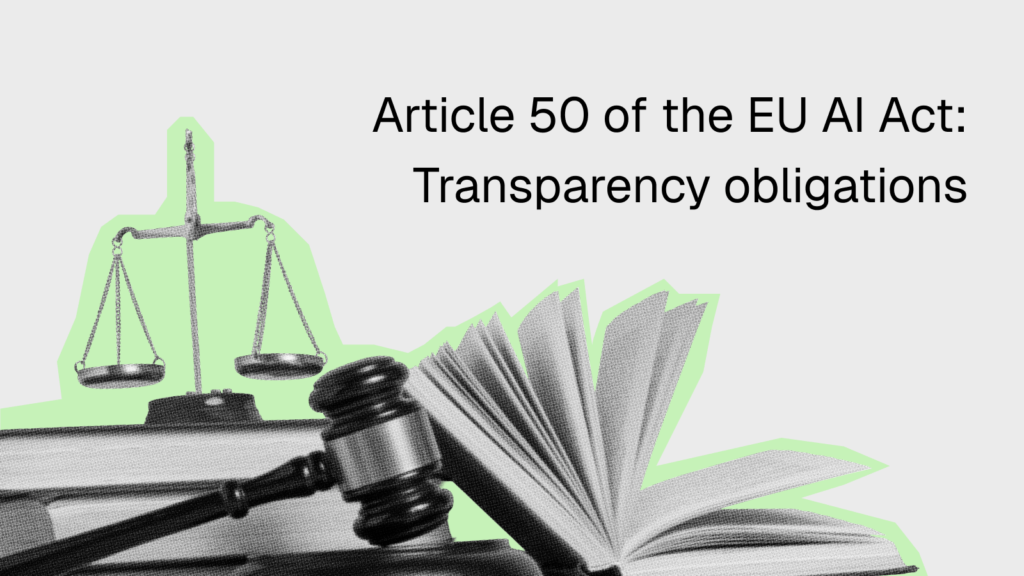
The EU AI transparency rules took effect on August 2, 2026, forcing companies to explain when people are interacting with artificial intelligence and when certain content has been generated or changed by an AI system. According to the European Commission’s Article 50 guidance, the rules apply to interactive systems, synthetic media, deepfakes, emotion recognition tools and some public-interest text. Companies that breach the requirements can face fines of up to €15 million or 3% of worldwide annual turnover.
The EU AI transparency rules come from Article 50 of the AI Act. Providers must design chatbots and similar systems so users are informed that they are dealing with AI, unless that fact is already obvious. Providers of generative AI must also add machine-readable marks to synthetic audio, images, video and text where technically feasible. These marks are intended to help platforms, regulators and detection tools identify artificial content.
The immediate business risk is financial and operational. The Commission says national market surveillance authorities, the AI Office and the European Data Protection Supervisor will share enforcement responsibilities. Some generative AI systems placed on the market before August 2 receive a limited transition period until December 2, 2026, for the machine-readable marking obligation. That grace period does not suspend every disclosure requirement.
Supporters say the EU AI transparency rules give consumers a clearer signal when they encounter synthetic media or automated systems. That matters because realistic voice, video and image generation can make fraud harder to detect. The AI Decode previously reported on an AI deepfake scam in which a worker was tricked during a video call, showing how synthetic identities can create direct financial harm.
The limits are equally important. A label does not prove that content is false, and the absence of a label does not prove that it is authentic. Machine-readable marks can also be removed during editing, compression or reposting. Companies may face difficult decisions over what counts as a substantial AI alteration, especially when a human editor changes model output before publication. The EU AI transparency rules will depend on technical standards, consistent enforcement and whether users understand the labels.
A second viral claim this week showed why wording matters. One social media post said a Google study found that forcing AI models to deny consciousness caused a collapse in empathy and ethical alignment. The underlying AI consciousness preprint, submitted to arXiv on July 30, 2026, is more limited. Junsol Kim, Geoff Keeling and five co-authors tested Llama-3-8B-IT, Gemma-2-2B-IT and Gemma-2-9B-IT across four experiments. They examined how safety fine-tuning affected model answers about consciousness, animals, spirituality, moral values and subjective well-being.
The authors found no measurable change on MMLU or two Theory of Mind benchmarks after removing the safety-refusal direction. They also reported that responses across 95 General Social Survey items moved closer to human distributions after steering. These results may help researchers study how safety training changes internal model representations. They do not show that an AI model is conscious, feels empathy or experiences distress. The paper is also a preprint and has not completed peer review.
The consciousness debate exposes a gap the EU AI transparency rules do not directly solve. A chatbot can be clearly labelled as artificial and still make misleading claims about its own feelings, beliefs or awareness. AI companies therefore face two linked tasks: identifying synthetic systems and limiting unsupported statements that may encourage users to treat model outputs as evidence of inner experience.

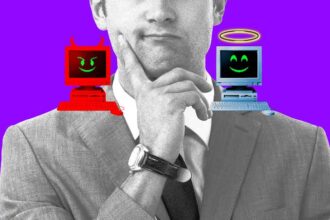

The positive case is that stronger labels and better safety testing can reduce confusion. The critical case is that both systems remain incomplete. Labels can be ignored, while safety tuning can produce side effects that are difficult to measure. That is where the EU AI transparency rules may offer only a partial answer. The AI Decode has also examined broader OpenAI AI safety concerns, including the challenge of testing model behaviour under controlled conditions.
The next test for the EU AI transparency rules is practical enforcement. Regulators must decide how visible labels should be, how machine-readable marks survive distribution and how responsibility is divided between model providers, platforms and publishers. At the same time, researchers will need to show whether the consciousness findings hold across newer AI models, larger samples and independent replications.