





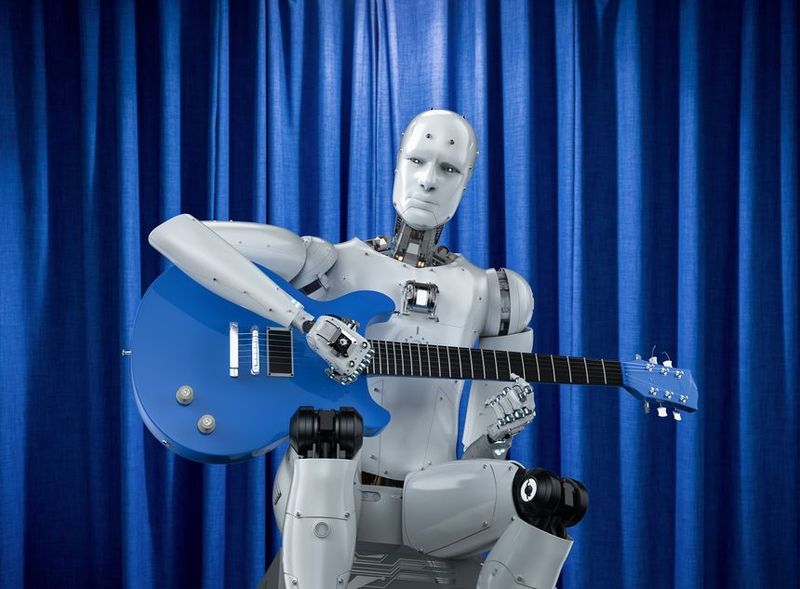

AI music is flooding into mainstream platforms, raising fresh questions about fake artists, cloned voices, copyright and streaming royalties.
A song no longer needs a singer standing near a microphone.
It may not need a singer at all.
AI music tools can generate vocals, melodies and full songs from a short written request. That has given ordinary people an easy way to experiment with music.
It has also created a strange problem for listeners.
You may hear a convincing song online and have no idea whether the “artist” exists.
The legal pressure is growing too. In July, a German court ruled that AI music company Suno violated copyright in a case brought by music rights organisation GEMA. Reuters reported that the court ordered Suno to disclose revenue linked to the disputed use and pay damages that had not yet been quantified. Suno said it was considering an appeal.
Here are nine AI music issues listeners and artists should understand.
1. A familiar voice may belong to nobody
Voice cloning can make a generated song sound surprisingly close to a known performer.


That creates an obvious identity problem.
A listener can believe an artist released a song when the artist never recorded it, approved it or even heard it.
The problem is especially difficult on short-video platforms, where music spreads faster than corrections.
2. Fake artists can look real
A profile photo can be generated.
The biography can be generated.
The music can be generated.
Even comments promoting the artist can be automated.
That makes AI music capable of creating something closer to a fictional celebrity than a normal song.
Listeners should check established artist pages, label accounts and official social profiles before assuming a strange new release is genuine.
3. Copyright rules are still being fought over
Music generators need huge amounts of existing music to learn patterns.
Artists and record companies have spent years arguing that some companies used copyrighted work without permission.
AI companies have challenged parts of those claims and increasingly pursued licensing deals.
The legal question matters because an apparently simple generated song can sit on top of a complicated dispute over how the system learned to produce it.
4. Real musicians can lose royalties to fake listening
Streaming fraud already existed before AI music.
Cheap song generation makes scale easier.
A person can generate thousands of tracks and use automated accounts to play them repeatedly, attempting to collect royalties or manipulate recommendations.
Deezer said it was receiving about 60,000 fully AI-generated tracks per day by early 2026, equivalent to roughly 39% of daily uploads on its platform. The company said it removed up to 85% of fraudulent streams involving detected AI music during 2025.
That is a scale problem human moderators cannot solve song by song.
5. AI detection is not perfect
Listeners often ask for a simple test: is this song AI-generated?
That answer can be harder than expected.
Audio may contain a mixture of human singing, generated backing music, digital mastering and synthetic effects.
A song does not always fit neatly into “human” or “AI.”
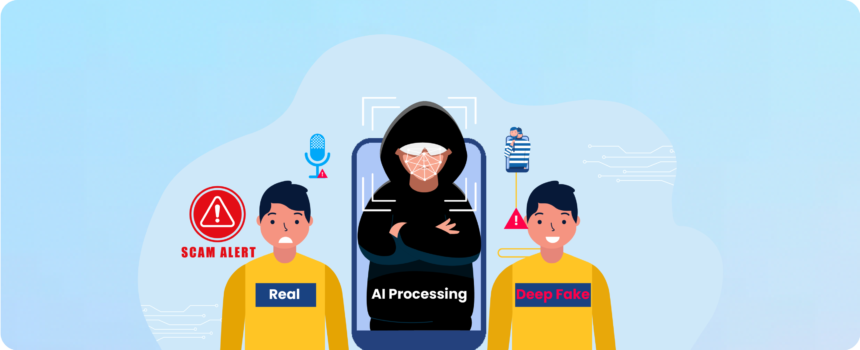
The same problem appears with synthetic video and voice. The AI Decode’s coverage of a $25 million deepfake scam shows why convincing synthetic media increasingly requires verification rather than instinct.
6. Artists may lose control of their identity
A musician’s voice is part of their career.
Fans recognise it immediately.
If anyone can generate a convincing imitation, artists face a problem that ordinary copyright law was never designed to handle cleanly.
A fake track could contain political statements, offensive lyrics or commercial endorsements the artist would never accept.
7. Smaller musicians may become harder to discover
Cheap AI music means platforms can receive far more songs than before.
That does not automatically make those songs popular.
It does make attention more crowded.
Independent musicians already compete against enormous catalogues. An endless supply of generated tracks raises the cost of being noticed.
The problem is discovery, not simply creation.
8. People may stop trusting unusual new music
There is another side to the fake-content problem.
Once listeners know realistic synthetic songs exist, they may accuse genuine musicians of using AI when they did not.
The AI Decode has tracked similar trust problems around AI-generated content and online scams, where automated activity can blur what came from a person and what did not.
That uncertainty can hurt real creators too.
9. Nobody agrees yet on what listeners should be told
Should an AI-generated song carry a label?
Should streaming services show whether the voice is synthetic?
Should a track that uses AI only for mastering receive the same label as a song created entirely from a prompt?
Those questions sound simple until actual music production enters the picture.
Modern songs already involve heavy software processing.
The useful dividing line may eventually be disclosure rather than trying to define one universal percentage of “AI.”
AI music is not going away because the tools are cheap, fast and entertaining.
The unresolved issue is trust.
Listeners need to know who made the song. Artists need to know who is using their work. Streaming platforms need to know which plays are genuine.
Until those answers become clearer, hearing a convincing voice is no longer proof that the person behind it ever stepped into a studio.