







Texas AI Data Centers face stricter checks over water and electricity use
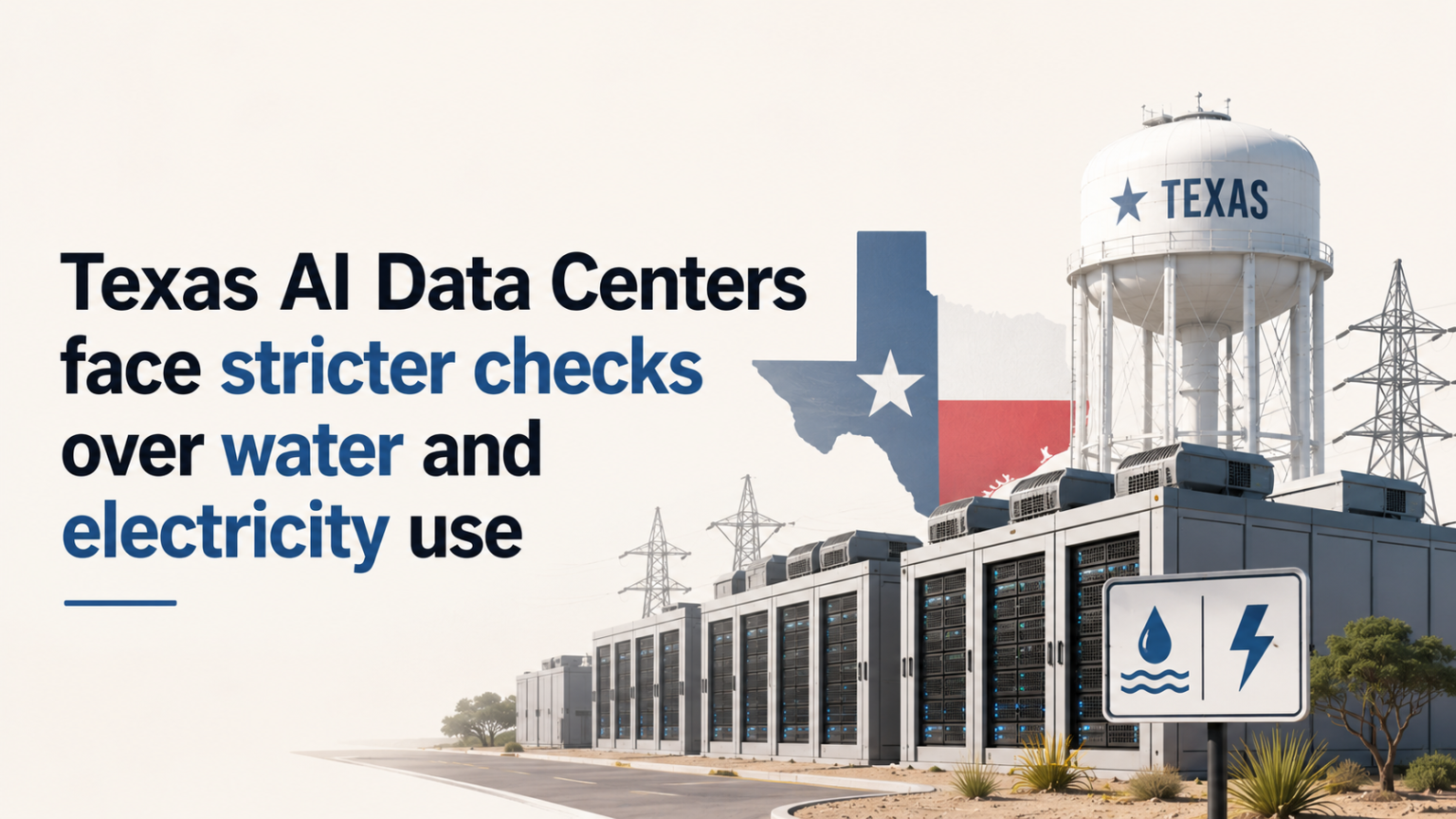
Texas has put new Texas AI Data Centers under tougher scrutiny as Governor Greg Abbott responds to concerns over electricity demand, water supplies and local opposition. The state has paused new data-center grid connections while officials audit projects seeking access to Texas’ power system.
According to ETCIO, developers will have to disclose expected water consumption and show that their facilities will not take water needed by nearby communities. Abbott also wants projects to demonstrate that they will not reduce electricity available to consumers.
The scale explains the concern. Texas has more than 300 operating data centers and at least 200 additional facilities in the pipeline, according to an ABC News analysis cited by ETCIO.
AI infrastructure is particularly demanding because thousands of high-performance chips run continuously inside large facilities. Those chips consume electricity and produce heat, which means operators also need cooling systems.
Water use varies considerably depending on the facility and cooling technology. KUT’s analysis of Texas data centers found that existing facilities currently account for less than 1% of statewide water consumption. By 2030, however, estimates range from 29 billion to 161 billion gallons annually, or roughly 0.5% to nearly 3% of Texas’ total water use.
That uncertainty is part of the problem facing Texas AI Data Centers. Officials need to plan infrastructure years ahead, while the amount of electricity and water required can vary sharply between proposed projects.
Electricity may be the more immediate constraint. Abbott ordered the Public Utility Commission of Texas and ERCOT, which manages most of the state’s power grid, to audit data centers moving through the interconnection process.
The pause comes after Texas spent years attracting technology investment with relatively cheap land, energy resources and a business-friendly regulatory environment. AI companies now need enormous amounts of computing capacity, turning access to electricity into a strategic constraint.



The issue extends beyond Texas AI Data Centers. The AI Decode’s coverage of AI infrastructure jobs has examined how spending on data centers is creating new construction and infrastructure demand alongside the AI boom.
At the same time, the economics of AI infrastructure increasingly depend on access to energy. The AI Decode’s Google-SpaceX compute coverage examined another approach to the growing demand for computing capacity and the physical infrastructure behind AI systems.
There is a benefit to expanding Texas AI Data Centers. Large facilities bring construction spending, investment and computing capacity needed by AI companies. The problem is deciding who pays when those facilities require new power generation, transmission infrastructure or water projects.
Public opposition is also becoming harder to ignore. ETCIO reported that hundreds of people recently attended a 13-hour protest against two proposed data centers. Abbott has said gaining local community support should be part of the approval process.
The Texas decision does not mean its AI infrastructure expansion has ended. It means Texas AI Data Centers will face more questions before new projects can connect to the grid.
The next test is whether developers can prove that large AI facilities can expand without pushing electricity costs higher or competing with communities for limited water supplies.