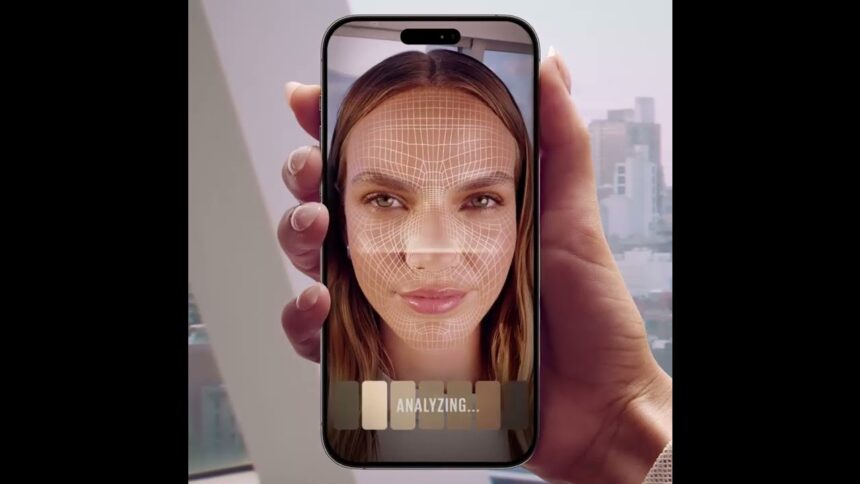








An AI deepfake can look convincing at first glance. These nine warning signs can help you decide when an image, video or voice deserves a second check.
The strange photo used to give itself away.
Six fingers. Melted text. A face that looked perfect until you stared at the ears.
That easy era is fading.
An AI deepfake can now copy a real person’s face, recreate their voice or place them inside a video they never recorded. Some fakes are made for jokes. Others are built to steal money, spread false stories or make a scammer look like someone you trust.
The U.S. Commodity Futures Trading Commission warned in March 2025 that criminals are using AI to create fake images, cloned voices, videos, live video chats and false online identities. Its guidance on AI fraud advises people to look closely for distorted visual details and to listen for unusual vocal tone, word choice or speech patterns.
There is no single trick that proves something is fake. The better approach is to collect warning signs.
Here are nine.
1. The face moves, but something feels slightly late
Watch the mouth closely.



An AI deepfake video may have tiny timing problems between the words you hear and the lips you see. The delay can be almost invisible at normal speed.
Look again if the mouth shape does not quite match certain sounds, especially quick words or sudden changes in expression.
This matters even more during a video call. The AI Decode recently covered a deepfake scam involving a fake executive call tied to a roughly $25 million fraud case.
2. Blinking and eye movement look unnatural
People blink without thinking about it.
Generated faces sometimes blink too little, too often or at moments that feel strangely mechanical.
The eyes may also stare in one direction while the head moves somewhere else. Reflections inside the eyes can differ from the lighting around the person.
One odd blink proves nothing. Several odd details together deserve attention.
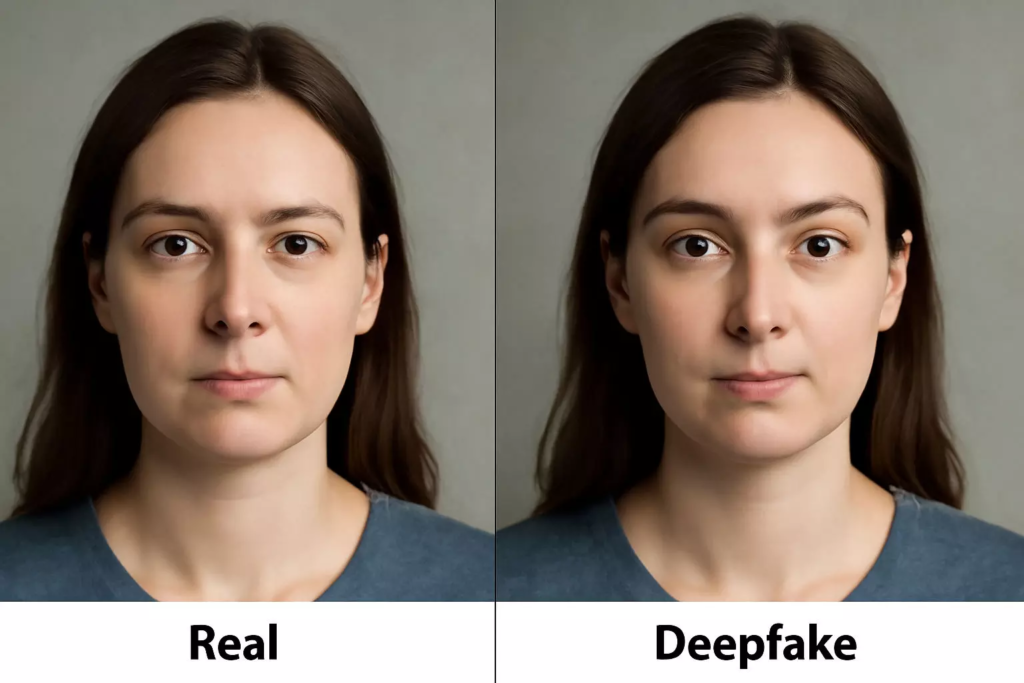
3. Hair, glasses and earrings behave strangely
Fine details remain difficult to keep consistent frame after frame.
Hair may merge into the background. Glasses can change shape near the temples. Earrings may disappear when a person turns their head.
In an AI deepfake, these problems often appear near the edges of objects because the system has to keep rebuilding the scene as it moves.
Pause the video instead of watching once at full speed.
4. Lighting does not agree with the room
Look at where the light is coming from.
If one side of a person’s face is brightly lit, nearby objects should usually show something similar. Shadows should also move in a believable direction.
An AI deepfake may produce a face that looks polished but does not quite belong in the room around it.
Skin can also appear unusually smooth compared with the neck, hands or background.
5. The voice sounds too clean or strangely flat
Voice cloning has improved quickly, which means obvious robotic voices are no longer the only warning.
Listen for pauses that arrive in strange places, unusual emphasis and emotion that does not match the situation.
The U.S. Federal Trade Commission warns that scammers can clone a person’s voice using only a short audio clip taken from content posted online. Its consumer guidance on voice-cloning scams says a familiar-sounding voice should not be treated as proof of identity. If a caller suddenly asks for money or claims there is an emergency, the FTC recommends contacting the person through a number you already know is theirs.
An AI deepfake voice may sound almost identical to someone you know while still speaking in a way that feels slightly off. Listen for strange pauses, unusual emphasis, flat emotion or word choices the person would not normally use.
6. Background sound does not fit
A person appears to be calling from a busy airport, but there are no announcements.
Someone walks outside, yet the wind never changes.
A voice moves farther from the camera, but its volume stays exactly the same.
These are small clues, but deepfake detection increasingly depends on checking whether every part of the scene agrees with every other part.
7. Hands and objects change between frames
Old image generators became famous for bad hands. Newer systems are much better.
The useful warning sign now is consistency.
A ring may jump between fingers. A watch disappears. A phone changes size. Writing on a shirt becomes different when the camera moves.
For a still image, zoom into objects people normally ignore. Text on signs, reflections and repeated patterns can reveal an AI deepfake faster than the face itself.

8. The person refuses a simple verification check
This is one of the strongest warning signs because it does not depend on spotting pixels.
If a boss suddenly asks for money, call them back on a number you already have.
If a family member says they are in trouble, ask something a stranger would struggle to answer.
The AI Decode’s broader artificial intelligence coverage has repeatedly shown how useful AI tools can create new trust problems once they enter normal consumer and business systems.
A convincing face should never replace independent verification.
9. The story is designed to make you act immediately
Urgency is a classic scam tool.
“Send the money now.”
“Do not call anyone.”
“This needs to stay confidential.”
An AI deepfake makes those old tricks stronger because the request can arrive with a familiar face or voice attached.
That emotional pressure may be the biggest warning sign of all.
If the request involves money, passwords, private documents or an emergency, slow the process down. Verify the person through another channel.
Perfect visual detection is becoming less realistic. Google said at I/O 2026 that research shows people identify high-quality deepfake videos correctly only about a quarter of the time, while tools such as SynthID and Content Credentials are being expanded to help verify where digital media came from.
That means the safest question is no longer simply, “Does this look fake?”
Ask whether the image, voice or video can be independently verified.
An AI deepfake can copy someone’s face.
It still should not get the final say over your money, identity or trust.