







ASML trillion dollar hopes depend on AI chip spending
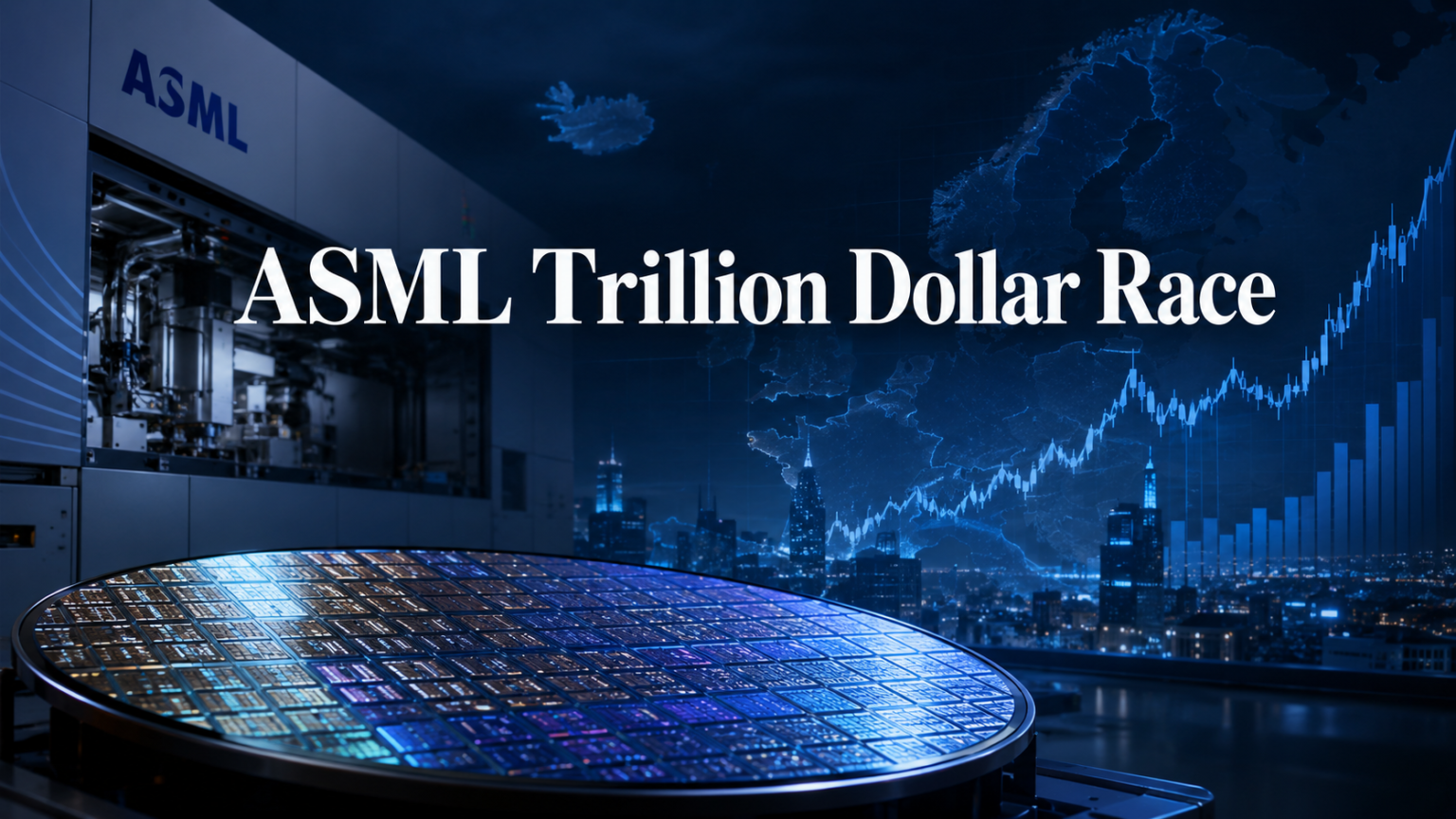
ASML trillion dollar talk has moved from market fantasy to analyst debate after the Dutch chip equipment maker became Europe’s most valuable listed company.
A Reuters report republished by The Economic Times said ASML shares had climbed about 60% this year, pushing the company close to a $700 billion valuation. Reuters reported that analysts at Barclays, Susquehanna and Bernstein now have 12-month price targets above $2,600 per share, a level that would roughly place ASML near a $1 trillion market capitalization.
ASML matters because it makes lithography machines. These machines print tiny circuit patterns onto silicon wafers. The most advanced version is extreme ultraviolet lithography, or EUV. ASML is the only company selling EUV systems at scale, according to Reuters, and those tools are used by chipmakers that supply processors and memory for artificial intelligence systems.
The current numbers explain the excitement. Reuters reported that ASML’s second quarter revenue reached €9.33 billion and net income hit €2.92 billion, both ahead of analyst expectations. The company also raised its 2026 revenue outlook to €43 billion to €45 billion and said it plans to increase capacity by 30% a year over the next two years.
Market data still shows how far the company has to go. ASML’s U.S.-listed shares recently traded at $1,747.58, with a market cap of about $687.5 billion, according to current market data. That is large enough to lead Europe, but still well below the trillion dollar mark.
The positive case rests on AI infrastructure. Data center operators such as Google, Amazon and Microsoft need more chips to train and run AI models. Chipmakers such as TSMC, Samsung, SK Hynix and Micron then need more advanced tools to produce those chips. Reuters said memory makers are shifting some production from older DUV tools to newer EUV tools, which could help ASML even if headline AI demand cools.
The risk is that ASML trillion dollar expectations leave little room for disappointment. The Economic Times version of the Reuters report said ASML trades at 38 times forecast 2027 earnings, according to LSEG data. That premium depends on continued hyperscaler spending, smooth supply chain expansion and strong execution from ASML’s customers.
Geopolitics is another limit. Reuters reported that U.S. lawmakers have proposed the MATCH Act, which could restrict ASML’s sales and servicing of chip equipment in China. The same report said ASML expects China to account for about 20% of sales in 2026. Any tighter export rule could affect revenue, even if AI demand remains strong elsewhere.



The broader story also fits The AI Decode’s coverage of Nvidia AI chip sales policy and OpenAI chip cost pressure. AI companies may want more compute, but the supply chain runs through a small number of firms with complex machines, long production timelines and political exposure.
ASML trillion dollar hopes now depend on whether AI chip spending stays high after the first rush of data center buildouts. Investors are betting on a long upgrade cycle. The harder question is whether demand, export rules and production capacity can all hold at the same time.