





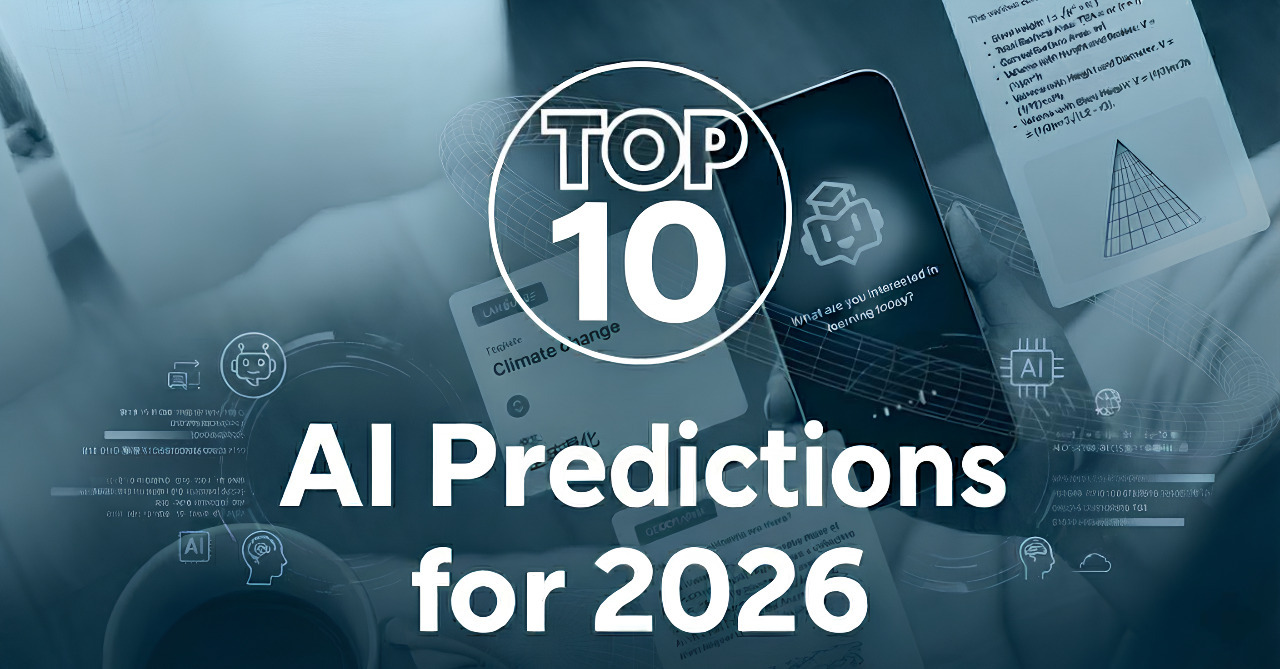

A year where AI moves from assisting users to shaping systems.
Artificial intelligence is moving into a more practical phase. Not because models are improving faster than before but because AI is now being wired directly into how people search, shop, work, create content, and manage daily tasks.
Search is becoming summarised rather than browsed. Retail is being updated in real time instead of through seasonal planning. Many office tasks are being quietly absorbed into AI tools. And some digital content created before generative AI is starting to carry more value simply because it was written by humans.
These changes are uneven. They are not happening everywhere at once but they are already visible inside specific roles, industries, and platforms. By 2026, they will start becoming normal.
1. Google Extends Its AI Lead as OpenAI Pushes ChatGPT Toward a Social Platform
Google continues embedding AI into search, email, documents, payments, maps, and Android services. OpenAI is turning ChatGPT into a persistent digital space where users chat, store documents, manage tasks, and interact with third‑party tools.
2. Apple, Google, and OpenAI Begin Acting as the New Internet Interface
Personal AI assistants increasingly handle reminders, shopping lists, bookings, and comparisons. Websites remain, but are visited less directly.
3. AI‑Native Retail Redesigns Commerce

Brands are changing prices, ads, and product listings daily based on demand and inventory. Small‑batch testing and rapid catalogue updates replace seasonal planning.
4. Data Poisoning Emerges as a Consumer Privacy Market
Users deliberately distort digital footprints through decoy searches, fake interest categories, and simulated browsing sessions.
5. Infinite Micro‑Apps Replace Traditional Software
Users generate short‑lived tools inside AI platforms for budgeting, contracts, planning, and analytics. Software becomes disposable.
6. The Influencer Middle Class Shrinks
The middle collapses as AI takes over work like writing reports, summarising meetings, and preparing basic research documents.
7. Skilled Trades Become Economic Safe Havens
Physical infrastructure roles see rising wages and steady demand due to regulation, safety requirements, and on‑site complexity.
8. Pre‑AI Internet Archives Become Premium Data Assets
Pre‑2023 human‑authored content is increasingly licensed and protected for training, verification, and historical reference. The past becomes a premium asset.
9. “AI‑Free” Becomes a Brand Position
Brands promote human‑made and AI‑free products for authenticity and emotional value.
10. Search Gives Way to Answer Synthesis
Search engines now deliver conclusions rather than lists of links, weakening traditional SEO.
2026 Snapshot
By late 2026, most people will no longer “search the internet”; they will consult AI systems that return conclusions rather than pages.
Who Wins / Who Loses
Winners:
• High-authority publishers
• Primary data providers
• Structured data platforms
• Knowledge graph builders
Losers:
• Low-authority content farms
• Click-dependent blogs
• Thin affiliate sites
• Keyword-stuffed SEO properties
Why 2026 Will Be Remembered
Some old rules stop working, especially around learning new skills and building careers. The internet becomes more assistant‑led than browser‑led. Work is repriced by physical reality. Authenticity becomes harder to scale.
2026 does not feel dramatic. It feels quietly different and structurally permanent.