






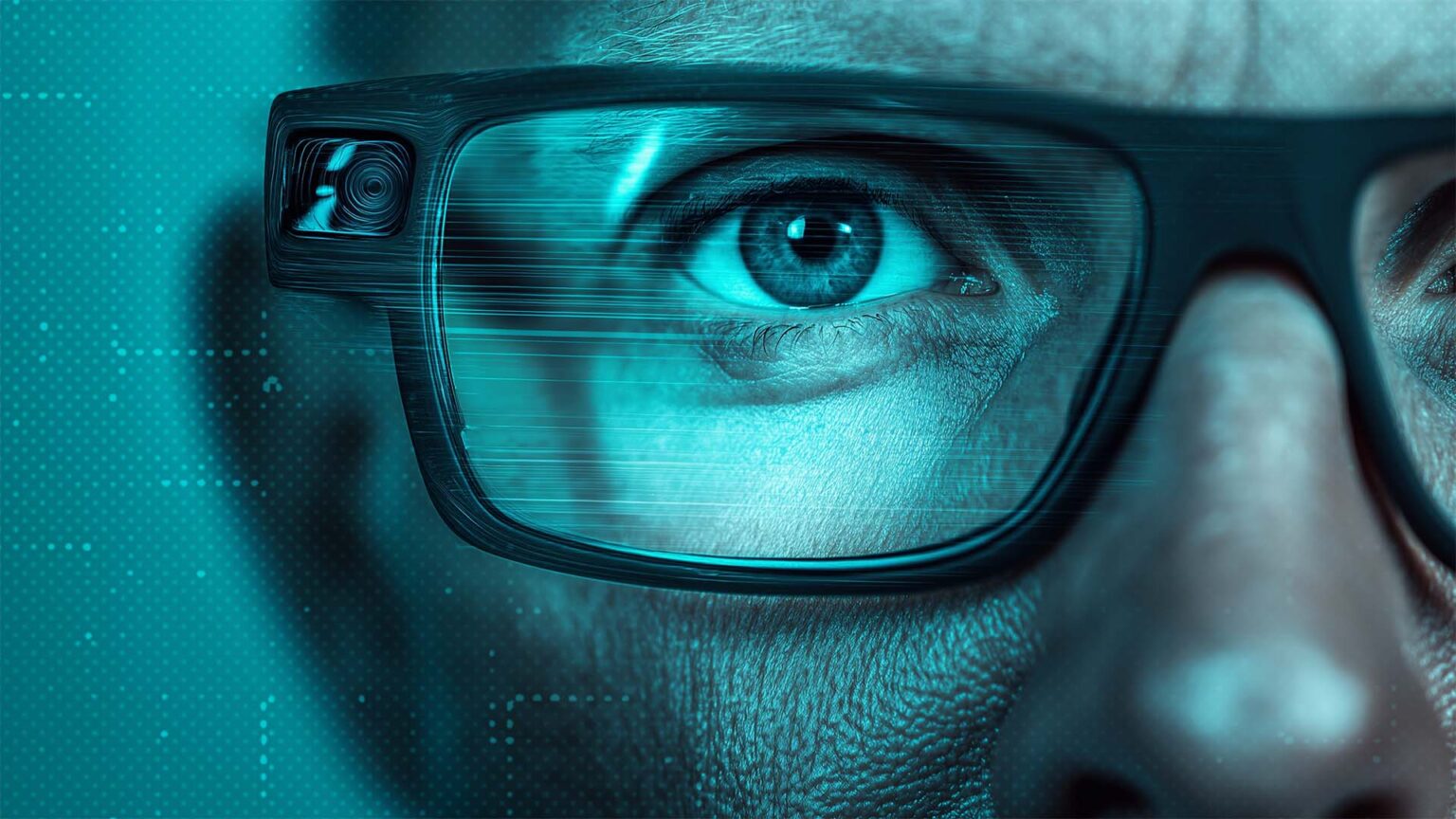

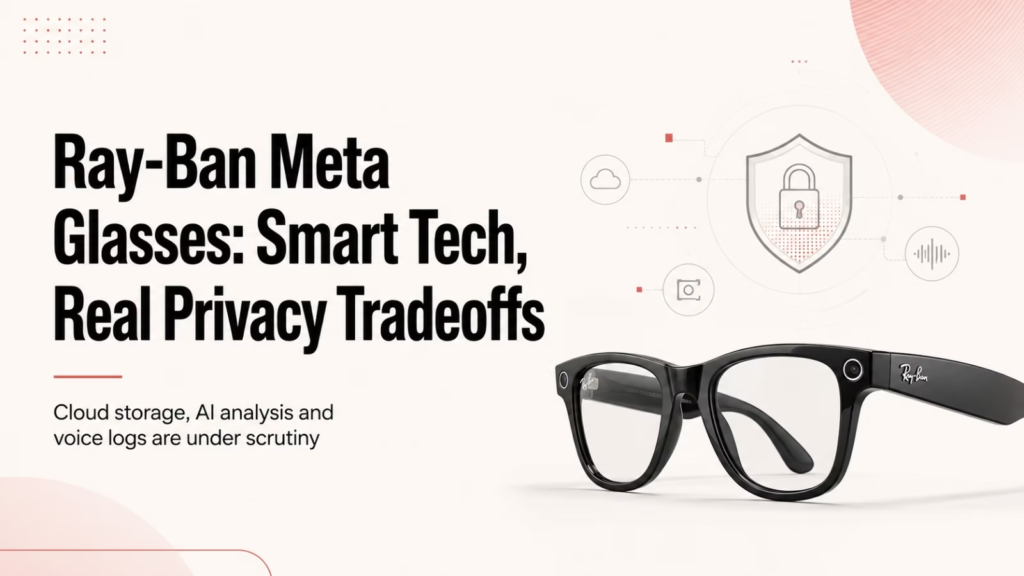
Smart glasses privacy concerns are growing as cameras, microphones and AI move onto devices that can record from a person’s point of view.
Someone pointing a phone camera at you is usually obvious.
Someone looking at you through a pair of glasses is not.
That difference explains much of the smart glasses privacy debate now following products such as Ray-Ban Meta glasses.
Modern smart glasses can take photos, record video, answer questions and use microphones while looking surprisingly close to ordinary eyewear. For users, that makes the technology convenient. For everyone around them, it makes understanding when recording is happening harder.
The issue reached German authorities in August after digital rights group HateAid filed a criminal complaint involving Meta and companies selling its glasses. Reuters reported that the complaint argues the devices can enable people to be filmed without adequately noticing. German authorities were conducting a preliminary examination of the complaint.
Here are nine smart glasses privacy risks that matter beyond one product.
1. People may not realise a camera is present
Phones look like recording devices.
Glasses look like glasses.

That basic design difference changes social expectations. A person sitting opposite you may have no reason to assume a camera is pointing directly at them.
Most current products include a light or other recording indicator. That helps, but only if people recognise what the light means and can see it clearly.
2. Recording can happen at eye level
Traditional cameras require effort.
You lift the phone. You point it. You frame the shot.
Smart glasses already sit exactly where the user is looking.
That makes recording unusually natural, but it also means smart glasses privacy concerns follow the wearer into restaurants, offices, public transport and homes.
3. Voice can be captured too
The camera gets most of the attention.
The microphone may collect the more sensitive information.
Conversations can contain names, addresses, workplace information, health details or financial information.
Someone may avoid saying something private when a phone is recording. They may never realise glasses are doing the same job.
4. AI can interpret what the camera sees
The privacy issue changes again when glasses do more than save a video.
AI-powered eyewear can analyse what is in front of the user, answer questions about objects and provide contextual information.
That means a future smart glasses privacy dispute may concern both recording and what software learns from the recording.
The AI Decode has covered how ChatGPT app integrations are moving assistants closer to personal information and everyday tasks.
Wearable cameras push that relationship into the physical world.
5. Workplaces could become uncomfortable
Imagine a meeting where one person arrives wearing camera-equipped glasses.
Is the meeting being recorded?
Where will that recording go?
Does everyone need to agree?
Companies will have to answer those questions before smart glasses become routine office equipment.
Sensitive workplaces such as hospitals, schools and legal offices face even harder decisions.
6. Children may be recorded without understanding it
Children cannot reasonably be expected to identify every type of wearable camera.
Parents may also struggle to know whether another adult’s glasses are recording.
That gives smart glasses privacy a different dimension from ordinary street photography.
Schools, sports clubs and childcare spaces may eventually need specific policies rather than relying on general phone rules.
7. Private spaces become a harder problem
Changing rooms, bathrooms, bedrooms and medical facilities already restrict cameras.
Smart glasses make enforcement harder because asking someone to remove ordinary-looking eyewear can create accessibility problems.
Some users genuinely rely on smart glasses for visual or hearing assistance.
Privacy rules need to distinguish legitimate accessibility use from recording where cameras clearly do not belong.
8. Recordings can become material for scams
A short video or clear voice recording can be useful far beyond the original moment.
The AI Decode has previously covered a $25 million deepfake scam showing how convincing synthetic identities can become when criminals have access to real voices and faces.
Smart glasses are not responsible for deepfake crime.
They can, however, make discreet first-person recording easier.
9. Society has not agreed on the rules yet
This may matter more than any single feature.
Smartphones arrived before most countries had clear answers about cameras everywhere. Smart glasses could repeat the same problem.
A separate Reuters report noted that Meta’s glasses were gaining traction while facing privacy scrutiny, particularly in Europe.
The benefits are real. Hands-free cameras can help people with disabilities, travellers and workers who need information without holding a device.
The smart glasses privacy problem is that everyone around the wearer also becomes part of that experience.
Phones taught people to recognise when a camera was raised.
Glasses may force society to learn an entirely new signal.