



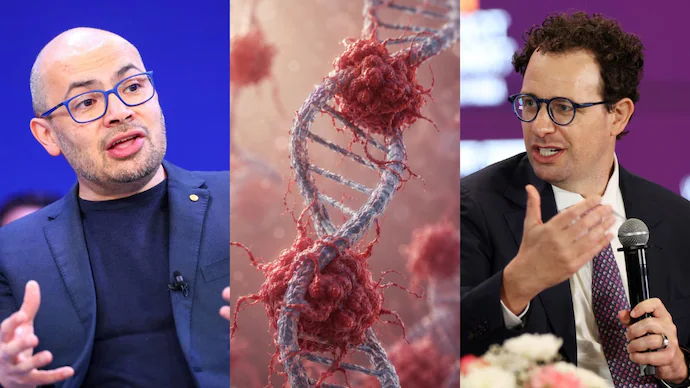

Dario Amodei AI trust argument says real scientific results must replace industry promises
Dario Amodei AI trust comments have put a simple challenge in front of the artificial intelligence industry: stop expecting marketing to convince a skeptical public and deliver something people can clearly value.
The Anthropic CEO addressed the backlash around AI in a public social media post. He acknowledged that AI companies have not yet delivered on some of their largest promises about benefiting society.
According to TechCrunch, Amodei said public skepticism around AI is fundamentally a “crisis of trust.” He argued that marketing alone will not fix it, and that AI companies need to deliver concrete benefits, using the idea of actually curing cancer as an example.
The comment should not be read as a claim that Claude has cured cancer. It has not. Cancer is also a broad group of diseases rather than one condition with a single universal treatment.
Amodei’s point was about evidence.
AI companies have spent years describing potential gains in science, productivity and medicine. At the same time, the public has seen concerns about job displacement, data center construction, copyright, privacy and the use of personal data.
That gap is central to the Dario Amodei AI trust argument. People do not have to reject the technology itself to question whether the companies building it will distribute its benefits fairly.
A separate Business Insider report said Amodei pointed to Anthropic’s work in biology and medicine while arguing that measurable scientific results would be more persuasive than promotional campaigns.

AI is already used in drug research. Machine-learning systems can help researchers predict molecular structures, identify possible drug candidates and process large biological datasets. Those tools may reduce parts of the research workload, but laboratory testing, clinical trials, regulation and medical judgment remain necessary.
The issue connects directly with The AI Decode’s coverage of AI research funding, including federal plans to direct more resources toward AI-led scientific discovery and drug research.
Amodei also supports stronger oversight. The broader trust debate is therefore not only about what AI can accomplish. It includes who controls advanced models, how companies behave and what safeguards apply when systems fail.
Those questions are becoming more important because AI public trust remains weak even while chatbot use continues to increase.
The Dario Amodei AI trust argument sets a high bar, perhaps intentionally. AI companies can make ambitious claims quickly. Medical breakthroughs cannot be produced on a marketing schedule.
The question now is whether AI’s measurable scientific contributions can grow quickly enough to narrow the gap between what the industry has promised and what the public can actually see.