







AI robotics training data is turning everyday Indian work into first-person video for robots
Viral posts from Indian Tech & Infra and Pubity have pushed a quiet AI labor market into public view: Indian workers are being paid to record everyday tasks so robots can learn from human movement.
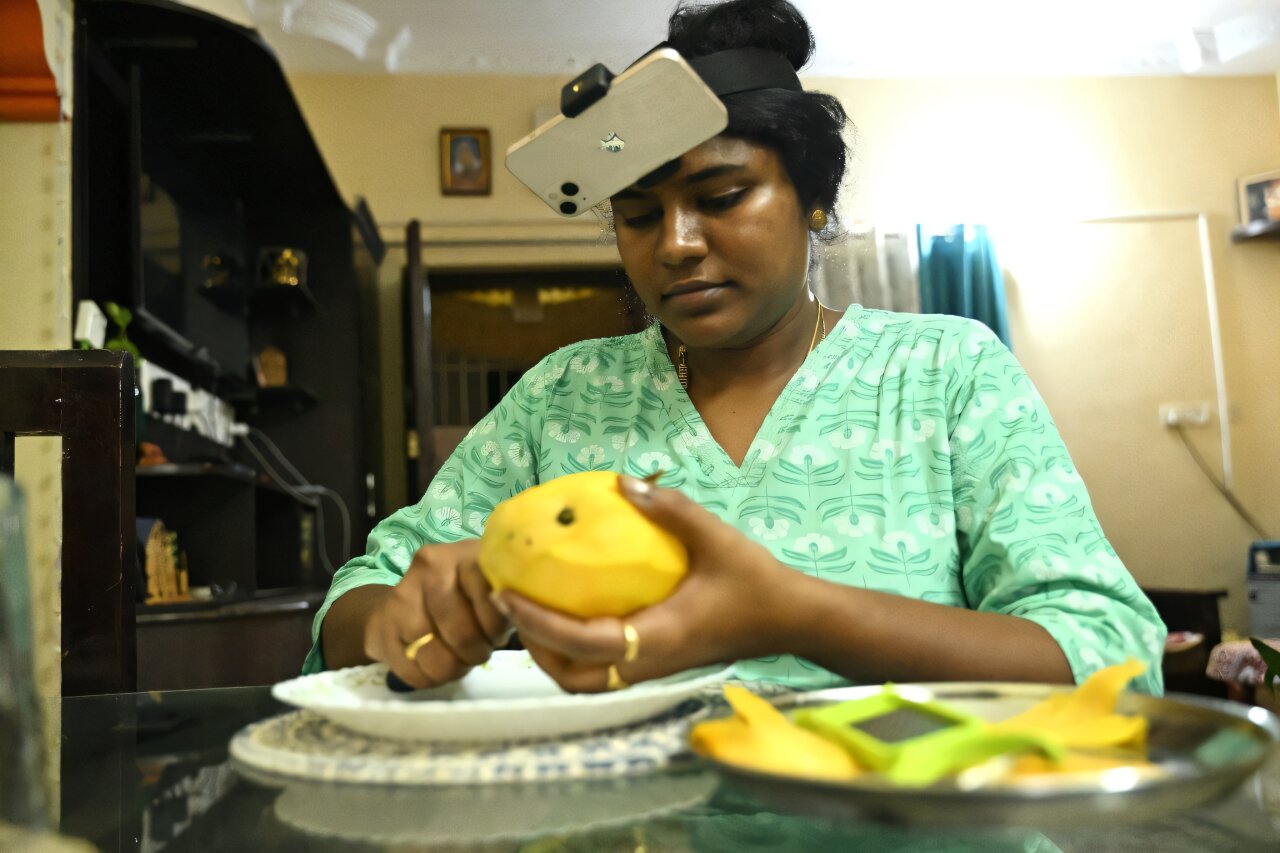
The posts pointed to people earning around ₹250 an hour, or about $2.60, for first-person videos of routine work. AFP, in a report carried by TechXplore, identified one worker as 25-year-old Nagireddy Sriramyachandra in Chennai, who films herself slicing mangoes with a smartphone strapped to her head. This is what they call AI robotics training.
This footage is known as egocentric data. In simple terms, it means video captured from the worker’s own point of view. For AI robotics training data, that angle is valuable because a robot also needs to understand hands, objects, distance and motion from a working perspective. Chatbots can learn from text. Robots need examples of how physical tasks happen in kitchens, factories and homes.
According to AFP’s reporting, Sriramyachandra sends recordings through an app to Objectways, an AI data company with offices in India and the United States. The report said some AI robotics trainers work at home, while others use head-mounted cameras, smart glasses and motion sensors in factories or staged apartment rooms.
The positive case is income and access. For some workers, ₹250 an hour can be meaningful local pay for tasks they already know how to do. Objectways head Ravi Shankar told AFP that requested videos include folding clothes, making coffee, cooking and sandwich preparation. Supporters argue that this kind of AI robotics training data could create new work around data collection, review and robot supervision.
The critical case is harder to dismiss. Workers are helping build systems that may later automate similar work. AFP quoted a Bengaluru flower garland maker, Ponni, saying the next generation doing work like hers may face a problem. The same report said one 21-year-old trainer records around 90 four-minute towel-folding videos a day and feels as if she is always wearing a camera.
The demand is not limited to India. The Verge reported that startups are paying people for real-world household footage because physical AI has a data bottleneck. AI data firm iMerit markets first-person video datasets for embodied AI and robot foundation models, including tasks such as cutting vegetables, doing dishes, folding laundry and vacuuming.
India’s policy challenge is larger than this one trend. A NITI Aayog release in October 2025 said India has 490 million informal workers and warned that AI will not automatically transform the informal sector without deliberate intervention. That warning now applies directly to AI robotics training data: who owns the footage, who benefits from the model, and what happens when the trained robot enters the same labor market?
The story also shows how physical AI is moving beyond lab demos into everyday work. The AI Decode recently covered how AI farm tools are helping a Hokkaido farmer manage a 100-hectare operation, which points to the same tension: AI can help workers build cheaper tools, but it can also collect the knowledge that makes their work easier to automate.



The next question is whether India can turn this data work into protected, better-paid employment before the market treats human movement as just another cheap input.