




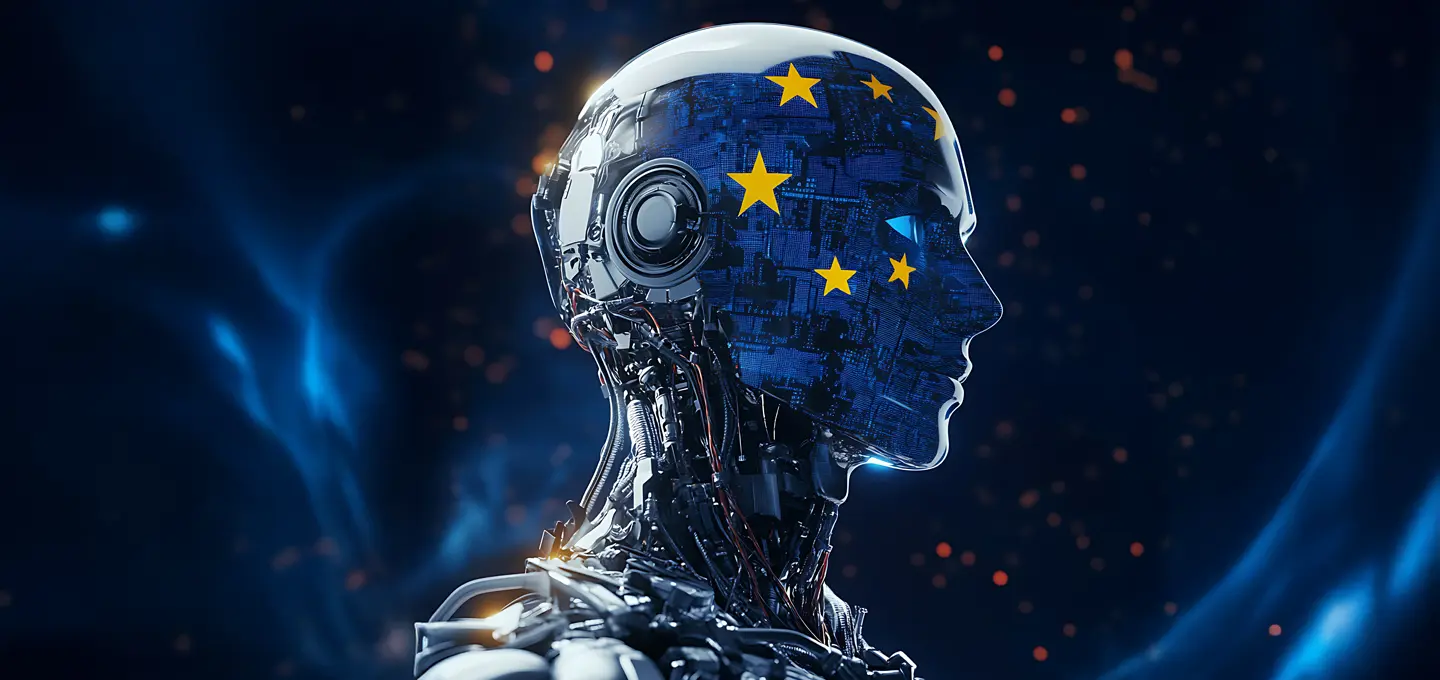

Europe AI safety policy is entering a harder phase as Brussels tries to control frontier-model risks without becoming more dependent on U.S. and Chinese technology.
Europe has spent years building rules for artificial intelligence. Yet Europe AI safety has played a smaller role in the latest global argument over whether the most powerful AI models are advancing too quickly.
That is starting to change.
The debate intensified after executives from major AI companies warned about increasingly capable systems, cyber risks and models potentially helping to accelerate AI research itself.
Europe faces an awkward position. It has some of the world’s most developed AI regulation, but many of the frontier models at the centre of the debate come from U.S. companies such as OpenAI, Anthropic, Google and Meta.
A Guardian analysis argues that Europe’s limited presence among the largest frontier AI developers has reduced its influence in the safety discussion even though the continent has been far more willing to regulate the technology.
European Commission President Ursula von der Leyen is now trying to increase that role.
In her State of the Union address, von der Leyen said she would invite leading frontier AI labs to discuss how Europe could support efforts to “pace the frontier.”
She also pointed to risks from AI-enabled hacking and increasingly autonomous models while arguing that Europe needs stronger domestic AI capabilities.



That combination captures the central Europe AI safety problem.
Europe wants tougher safeguards.
It also does not want those safeguards to leave the continent permanently dependent on technology developed elsewhere.
Christine Lagarde, president of the European Central Bank, has made a similar argument. Europe cannot simply avoid AI, because doing so could sacrifice economic growth. At the same time, relying heavily on systems built in the United States or China creates another type of vulnerability.
That dependence runs through several layers of the technology.
Europe relies heavily on foreign cloud providers, advanced AI chips and frontier models. It has strong research institutions and important technology companies, but it has not produced an AI platform with the global reach of ChatGPT or Gemini.
Former EU competition chief Margrethe Vestager has argued that Europe therefore needs to build more of its own AI infrastructure, including computing capacity and data centres.
The goal is economic, but it is also connected to Europe AI safety.
A region that does not control the models or infrastructure it uses may have less influence over how those systems are tested, updated or restricted during a serious incident.
The EU AI Act gives Europe an important regulatory tool.
The law places requirements on high-risk AI systems and includes obligations involving risk management, transparency and safety. More powerful general-purpose models can also face additional requirements.
Still, regulation alone does not give Europe control over the global pace of AI development.
If an American company develops a substantially more capable model, European rules can affect how that system is offered inside the EU. They cannot by themselves stop the company from building it.
That distinction is becoming more important as AI executives themselves debate slowing development.
The AI Decode’s recent examination of why AI leaders want to slow development covered concerns ranging from cyberattacks to AI systems helping with future AI research.
Those warnings create an opportunity for Europe because regulation is already one of its strongest tools.
They also create a risk.
If policymakers respond by assuming Europe simply needs immediate access to every frontier model produced in the United States, the continent could deepen the same dependence it is trying to reduce.
Frederike Kaltheuner of the AI Now Institute told the Guardian that the current debate is heavily shaped by a particular American view of AI progress, where increasingly powerful frontier models sit at the centre of economic and security strategy.
That framing is contested.
Many European businesses still care more about practical questions such as price, data protection and whether AI systems can reliably improve normal operations.
This creates another version of the Europe AI safety debate: whether policymakers should focus mainly on future catastrophic risks or give equal attention to problems already affecting workers and consumers.
Europe’s existing rules lean heavily toward those practical issues. They cover areas such as AI use in hiring, healthcare and consumer-facing systems.
Supporters see that as useful because it addresses applications people encounter today.
Critics of the EU approach argue that heavy compliance costs can slow innovation and make it harder for European companies to compete.
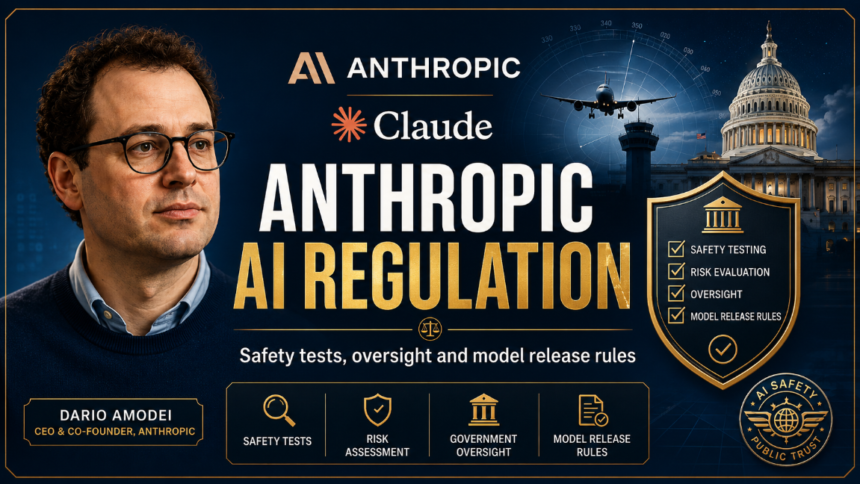
The AI Decode has previously examined Anthropic’s AI regulation proposal, which calls for stronger testing and independent evaluation of the most capable models. That approach focuses regulation more directly on frontier systems that could create severe risks.
Europe may eventually combine both models.
It can continue regulating how AI affects ordinary citizens while also developing deeper testing, incident reporting and international coordination around frontier models.
Von der Leyen said Europe wants to work with partners including Canada and the United Kingdom on evaluation, verification, early-warning systems and AI security.
That still leaves the largest obstacle.
The United States and China remain central to any global agreement because both have enormous AI capabilities and strategic reasons to keep advancing them.
Europe can create rules inside its own market. A genuine slowdown or common safety standard would require much broader cooperation.
That makes Europe AI safety a question of influence as much as regulation.
Europe already has rules.
The harder task now is building enough technical capacity and international leverage to help shape what happens before the next generation of models reaches the market.