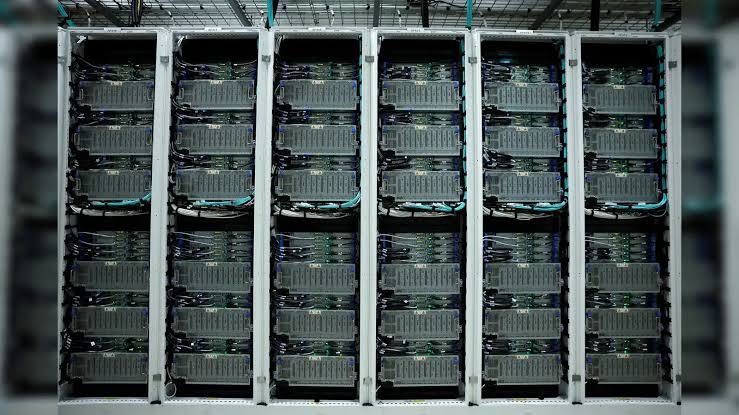

The data center IPO pipeline remains crowded as AI demand grows, but investors are asking harder questions about debt, electricity, customers and future returns.
The data center IPO boom is heading toward a much harder test.
Investors have spent years pouring money into the infrastructure needed to run artificial intelligence. Now, several data center companies want to turn that excitement into public listings.
The money is still available.
The questions are getting tougher.
According to a Reuters analysis, Singapore-based DayOne is pushing ahead with plans for a U.S. listing that could happen as soon as November.
The company could seek as much as $5 billion at a valuation of roughly $20 billion, Reuters previously reported.
DayOne has reasons to believe investors will listen to data center IPO.
It operates data centers across Asia-Pacific and Europe and says it has secured around 2.1 gigawatts of capacity bookings. It also raised $4.5 billion in a Series C funding round that closed in June.

But the wider data center IPO market has become less forgiving.
SoftBank-backed SB Energy postponed plans to formally market its own IPO as it deals with additional questions from the U.S. Securities and Exchange Commission.
Investor concerns also include the valuation SB Energy is seeking and its dependence on OpenAI as a major customer, according to Reuters.
Discussions around that listing have centred on a valuation of roughly $60 billion.
The contrast between DayOne and SB Energy explains what investors increasingly want from AI infrastructure.
Demand alone is no longer enough.
For the data center IPO, investors want to know whether customers have signed long-term contracts, whether a facility already has access to electricity and whether the company can survive if one large AI customer changes its spending plans.
Power has become particularly important.
AI data centers require enormous quantities of electricity. A developer can own land, secure financing and design a technically impressive facility, but none of that matters if the local grid cannot provide enough power.
Ke Yan, head of research at Shenton Research, told Reuters that investors increasingly distinguish between demand that is already contracted and powered and demand that exists mostly in future plans.
That is a major change for the data center IPO story.
During the first phase of the generative AI boom, association with AI could be enough to attract enormous investor attention.
Now the market wants evidence.
The financing problem is also becoming harder.
Moody’s projects that AI-related capital spending by the six largest U.S. technology companies could reach roughly $1 trillion in 2027, Reuters reported.
Building the physical infrastructure behind that spending requires huge upfront investment.
Data centers need land, cooling systems, networking equipment, transformers, high-density racks and increasingly expensive power connections.
Higher interest rates make those projects more costly to finance.
The AI Decode’s coverage of the OpenAI Jalapeno chip shows another side of the same economics. OpenAI is developing custom hardware partly because inference costs become enormous when AI services operate at global scale.
Cheaper chips can help.
They do not remove the need for power and buildings.
The data center IPO pipeline is also becoming crowded.
Switch has confidentially filed for an IPO, according to Reuters, while Vantage Data Centers and CyrusOne are among other operators exploring or preparing listings.
That gives investors more choice.
A company with operational facilities, multiple customers and secured electricity may therefore receive a very different reception from one whose valuation depends heavily on projects that have not yet been built.
Accelevation offers another example.
A separate Reuters report said the data center infrastructure company was targeting a valuation of up to $5.37 billion in its U.S. IPO, with plans to raise as much as $720 million.
Accelevation makes power distribution, cooling and modular infrastructure used in data centers.
Its listing highlights how far the AI investment boom has spread.
Investors are no longer being asked to fund only Nvidia, cloud companies and AI model developers. They are being offered businesses selling the physical equipment required to keep those systems running.
That also means the market has to decide which parts of the AI infrastructure chain will actually earn attractive returns.
The AI Decode’s report on OpenAI’s $38.5 billion loss warning shows why customer quality is receiving more attention.
OpenAI has enormous revenue growth and user demand, but frontier AI remains extremely expensive to operate.
If major AI companies eventually reduce infrastructure spending, renegotiate contracts or delay expansion, the effect could move directly into data center developers that built projects around those customers.
None of this means the AI infrastructure boom is ending.
The demand for computing power remains huge.
What is changing is the price investors are willing to pay for promises.
A data center IPO now needs more than an AI connection and an ambitious construction plan.
Public-market investors increasingly want operating assets, reliable customers, secured electricity and enough cash flow to support the debt required to build new facilities.
That is probably a healthier test for the industry.
The next wave of AI infrastructure companies will still have a chance to reach public markets. The difference is that investors are starting to ask whether the billions going into data centers can eventually produce billions in dependable returns.