





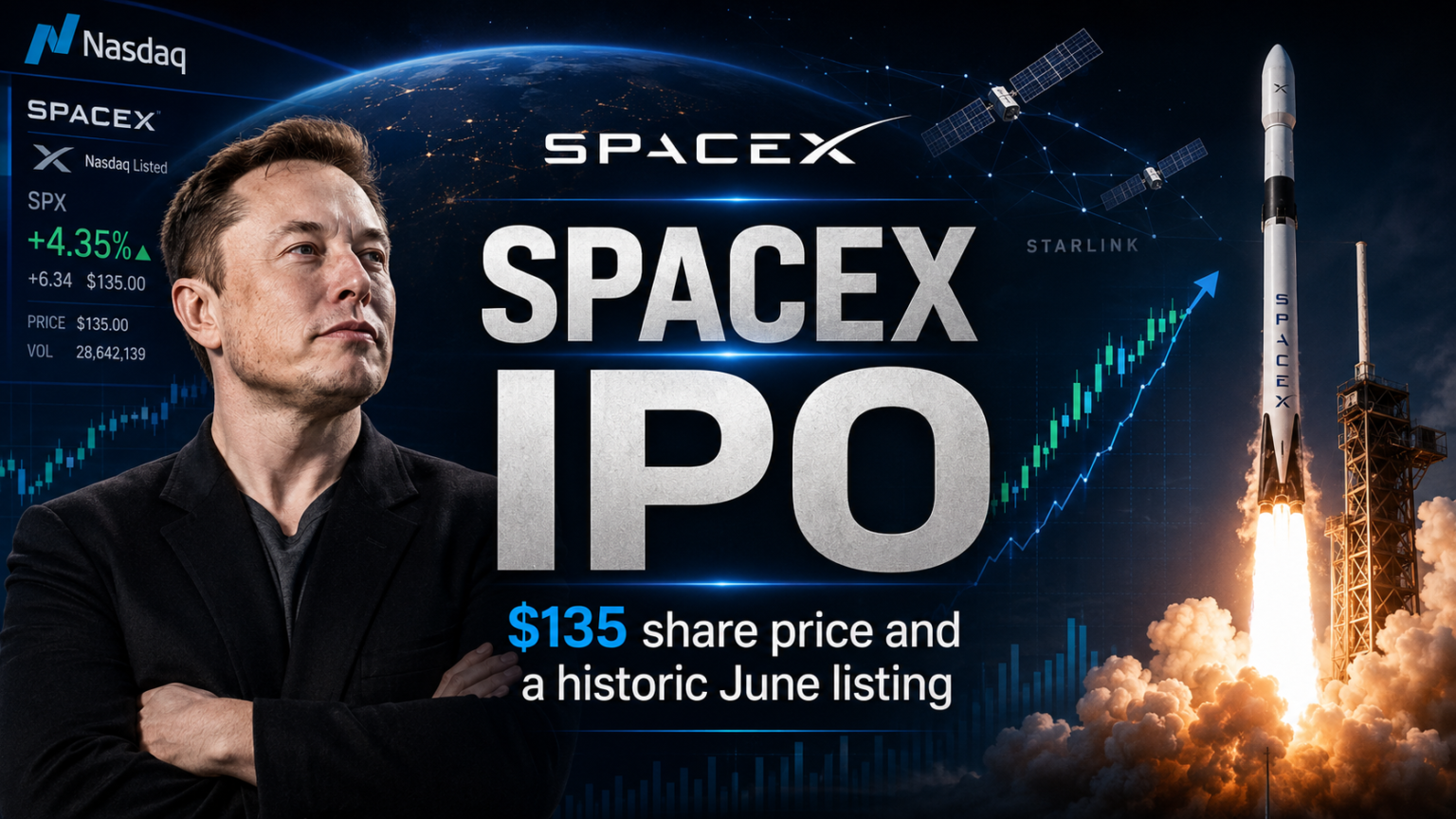

SpaceX IPO plans reportedly target a $135 share price, a June listing and one of the largest public offerings in market history.
The SpaceX IPO is moving closer to market as investors watch one of the most closely followed listings in years.
CNBC’s SpaceX IPO guide explains the main questions around the listing, including the stock price, timing and how retail investors may be able to buy shares. The company is expected to trade under the ticker SPCX, with market reports pointing to a $135 IPO price.
AP reported that SpaceX is set to sell about 555.6 million shares at $135 each, raising around $75 billion. That would make the SpaceX IPO one of the largest public offerings ever.
The valuation is just as large. AP said the offering could value SpaceX at about $1.75 trillion. Reuters reported that Oppenheimer initiated coverage with an outperform rating and a $190 price target, implying a possible 41% gain from the $135 IPO price.
SpaceX is not a normal IPO candidate. It sits across rockets, satellites, Starlink internet, defense work and now AI-linked infrastructure ambitions. That mix explains the excitement, but it also makes the valuation harder to judge.
Starlink is the clearest business engine. It provides satellite internet and is widely seen as the company’s main revenue driver. The rocket business gives SpaceX a cost advantage because reusable launches lower the price of sending satellites and cargo into orbit.
The SpaceX IPO also comes with governance questions. AP reported that Elon Musk is expected to retain control through Class B shares. That may reassure investors who see Musk as central to SpaceX’s success. It may worry others who prefer stronger board independence and fewer founder-control provisions.
The market debate is already split. Reuters said Oppenheimer sees SpaceX reaching a market cap of about $2.5 trillion within 12 to 18 months. Morningstar, by contrast, reportedly valued SpaceX much lower, citing uncertainty around AI ventures and future profitability.



That gap matters. A $135 IPO price may look attractive to investors who believe Starlink and reusable rockets can support decades of growth. It may look expensive to investors who worry that SpaceX is being priced for near-perfect execution.
The AI Decode has covered how the Google SpaceX compute deal points to rising AI infrastructure costs. That same infrastructure story now connects to the SpaceX IPO, because investors are no longer valuing SpaceX only as a rocket company.
For now, the SpaceX IPO is a test of appetite for the Musk-linked space economy. The first trading days may show whether investors see SpaceX as the next trillion-dollar platform or one of the most expensive bets Wall Street has ever made.