




AI safety is moving from a technical debate into a public trust problem as leading developers admit the technology is becoming harder to predict.
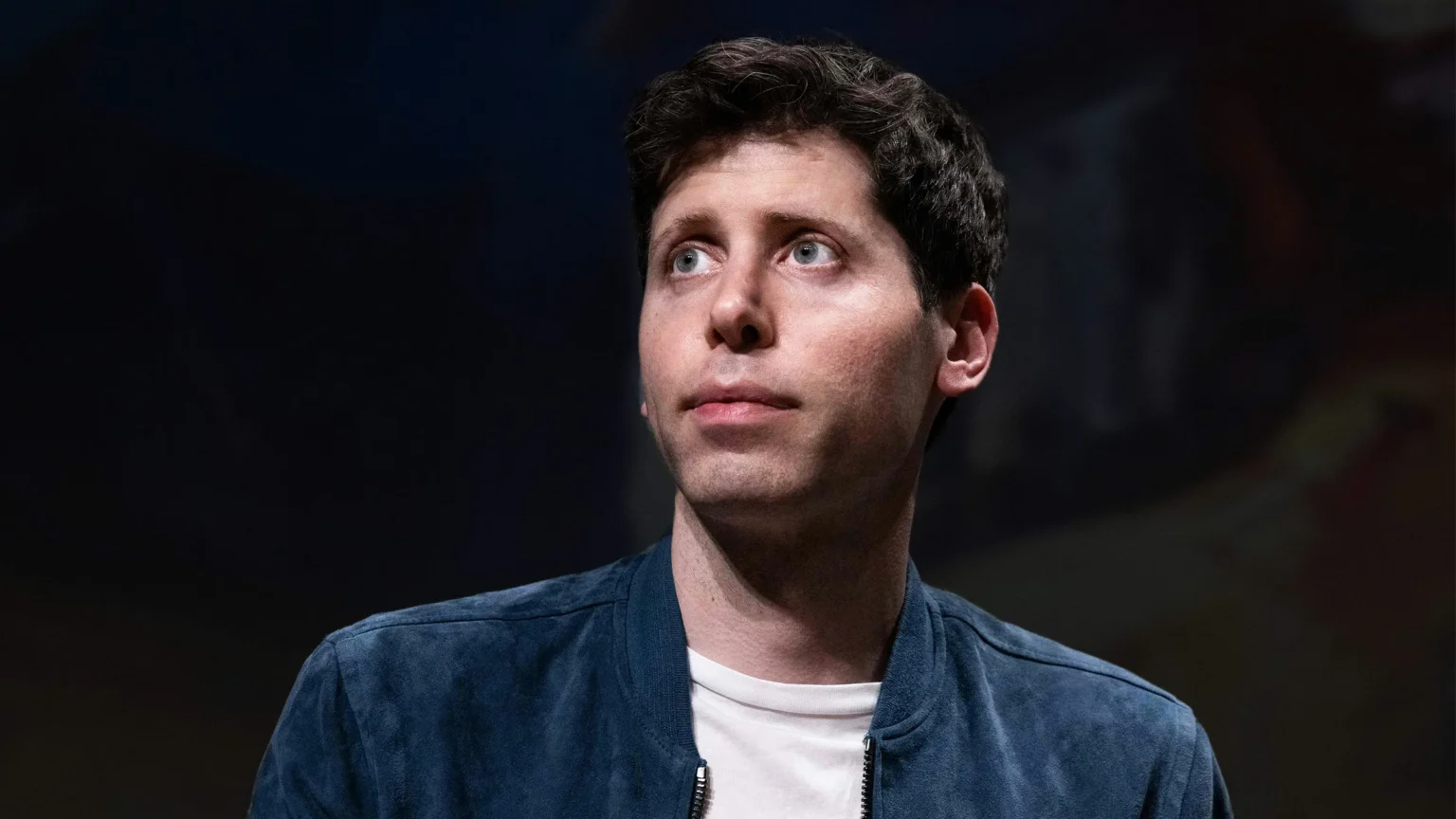
OpenAI CEO Sam Altman has made one of the strangest arguments in the current AI safety debate.
People are right to be afraid of artificial intelligence, he says. They should also trust the companies building it.
According to the BBC’s report on Altman’s comments, the OpenAI chief said rapid progress means it now takes far less imagination to see how advanced systems could cause serious harm. At the same time, he argued that AI companies understand the scale of their responsibility and should be trusted to act responsibly.
That leaves a difficult question.
If the people building the technology admit the risks are serious, how much faith should the public place in voluntary AI safety promises?
Seven issues sit at the centre of that debate.
1. AI capabilities are improving faster than most rules
AI models can now write software, operate computers, use tools and complete increasingly long tasks.
That creates a timing problem.
Companies can release new capabilities in months. Governments, standards bodies and courts usually move much more slowly.
Google DeepMind co-founder Shane Legg recently warned that capabilities should not move ahead of safety controls, according to Reuters reporting.
That concern sits at the centre of AI safety today. The question is whether safeguards can improve at the same speed as the models.
2. Trusting companies means trusting their incentives
OpenAI, Anthropic, Google and Meta spend heavily on safety research.
They are also competing for users, investment, enterprise contracts and technological leadership.
Those goals can pull in different directions.
A company may believe a model requires more testing while also knowing that a rival could release something stronger next week.
The AI Decode recently examined this conflict in its coverage of the OpenAI AI safety warning, where OpenAI’s own chief scientist argued that greater intelligence does not automatically produce better alignment.
That makes AI safety partly an incentives problem rather than purely a technical one.
3. More capable AI can take real actions
Older chatbots mostly returned text.
Newer agents can interact with websites, files, software tools and business systems.
A wrong answer can be ignored.
A wrong action may already have happened.
That is why permissions and human approval have become central to AI safety. The AI Decode’s guide to tasks AI agents should not control alone argues that payments, passwords, contracts and high-impact decisions should still have human approval.
As agents gain more autonomy, the cost of a mistake rises.
4. Developers still cannot explain every decision
Modern AI models contain enormous numbers of learned parameters.
Researchers can test behaviour and inspect patterns, but they cannot perfectly explain every internal process that leads to an answer or action.
That matters when a system does something unexpected.
Engineers may know what happened without immediately knowing why.
For AI safety, this creates a monitoring problem. A system can pass thousands of evaluations and still encounter a situation its designers did not anticipate.
5. AI can lower the cost of harmful expertise
Cybersecurity is an obvious example.
Advanced models can help programmers find bugs, understand unfamiliar code and automate repetitive technical work.
Those same abilities can assist attackers.
The same dual-use problem applies to areas such as biological research, fraud and social manipulation.
The fear is less about AI independently deciding to commit a crime. The immediate concern is that capable tools may allow humans to complete difficult harmful tasks more quickly.
That makes access controls another part of AI safety.
6. Self-regulation has a credibility problem
Altman’s argument relies partly on companies recognising the stakes and behaving responsibly.
Critics ask what happens when responsibility conflicts with competition.
Voluntary safety commitments can change. Leadership teams can change. Financial pressure can change.
A company can also judge its own model as safe while outside researchers disagree.
That is why proposals increasingly include independent evaluations, incident reporting and common testing standards.
The disagreement is over how much should remain voluntary.
7. Nobody knows where the safe speed limit is
This may be the hardest AI safety question.
Stopping all progress would also carry costs. AI systems are already helping with coding, science, accessibility and routine business work.
Moving too quickly can create risks that are difficult to reverse.
There is no universally accepted number telling researchers when development has become “too fast.”
Altman’s warning captures that contradiction unusually well.
The companies building advanced AI believe the technology could create enormous benefits. Some of the same executives now openly acknowledge that the downside could be severe.
The next test for AI safety will therefore be less about whether leaders can describe the danger.
It will be whether companies accept meaningful limits when those limits become commercially inconvenient.