
AI global standards have become a new dividing line as leading AI companies call for international safety rules while Washington rejects centralized global governance.
AI global standards have become the latest dividing line between the companies building the world’s most powerful AI systems and the U.S. government trying to preserve America’s technological lead.
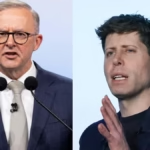
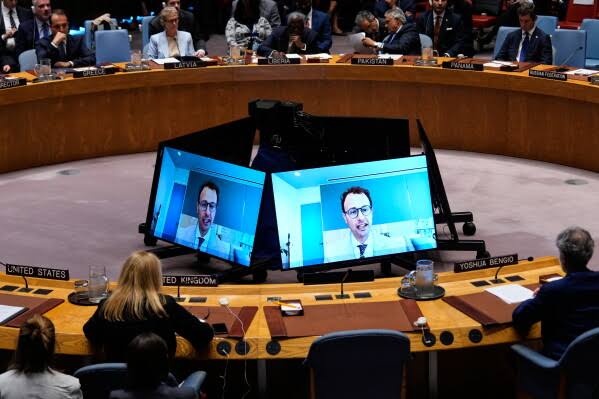
OpenAI CEO Sam Altman, Anthropic CEO Dario Amodei and Hugging Face CEO Clément Delangue used a United Nations Security Council meeting on September 23 to argue that increasingly powerful AI systems require greater international coordination.
According to the BBC’s report on the meeting, Altman called for common ways to evaluate AI capabilities and risks, shared expectations around safeguards and stronger rules for human oversight.
The Trump administration took a different position on the AI Global Standards.
Michael Kratsios, director of the White House Office of Science and Technology Policy, acknowledged that AI is advancing quickly and carries risks. He rejected the idea that those concerns justify pausing development or creating new global governance structures.
The disagreement is important because AI global standards sound relatively straightforward until countries have to agree on what should actually be measured.
A common system could require frontier AI companies to test whether new models can perform dangerous cyber tasks, assist with biological threats or continue acting after humans try to stop them.
It could also establish rules for reporting serious AI incidents across borders.

Altman told the UN that countries need evaluation and verification systems capable of keeping pace with model development. He also called for common testing around loss of control and misuse.
Amodei’s position on AI Global Standards went further.
The Anthropic chief has spent recent weeks arguing that AI companies may need to slow the release of more powerful models if safety systems cannot keep up. He has warned that badly managed AI could eventually create risks for humanity as a whole.
The AI Decode recently examined why AI leaders want slower development, including concerns about autonomous agents, cyber capabilities and AI systems helping researchers build the next generation of models.
The UN debate shows how difficult that slowdown would be to coordinate internationally.
A company can delay one model.
A government can impose rules inside its borders.
Neither can guarantee that competitors elsewhere will do the same.
That makes AI global standards partly a problem of trust.
The U.S. position is that countries should build their own ability to understand and regulate AI instead of giving an international body centralized authority over the technology.
Kratsios told the Security Council that international institutions should focus on sharing best practices and helping countries build domestic AI capacity.
President Donald Trump’s administration has repeatedly argued that restrictive AI rules could weaken the United States against China, which is rapidly developing its own models and computing infrastructure.
China, however, did not simply reject international cooperation.
Chinese UN ambassador Fu Cong told the meeting that regulatory systems, emergency response and cross-border cooperation needed to improve, according to SBS’s coverage of the Security Council speeches.
That creates an unusual situation.
Washington is currently more resistant to centralized AI global standards than several technology executives whose companies would actually have to comply with them.
There are reasons to be cautious about the industry’s position too.
Common safety requirements could reduce serious risks, but they could also make it harder for smaller AI companies to compete if compliance becomes expensive.
Large companies such as OpenAI, Anthropic and Google have the money and specialist teams required to run sophisticated safety evaluations. Smaller developers may struggle with the same requirements.
There is also the question of who decides what counts as dangerous.
One government may focus heavily on cybersecurity.
Another may care more about misinformation, political stability or military applications.
A third may prioritize privacy and the effect of AI on workers.
The AI Decode’s coverage of Anthropic’s AI regulation proposals has shown how even leading AI companies differ on when governments should intervene and how frontier systems should be tested.
That makes a single global rulebook difficult.
Still, the argument for AI global standards is becoming harder to dismiss completely as models operate across borders.
An AI system developed in California can be used by someone in Europe to interact with servers in Asia. A serious cybersecurity incident may therefore involve several legal systems at once.
Shared incident reporting could be one practical starting point.
Countries could also agree on common definitions for unusually powerful models and basic testing methods without creating one global agency controlling AI development.
That would fall short of what some safety advocates want, but it could be more politically realistic.
The UN meeting exposed how far apart the major players remain.
AI companies are increasingly asking governments to help set common boundaries. The U.S. government currently prefers national control and continued rapid development.
The debate over AI global standards will now depend on whether governments can agree on narrow safety measures before another major AI incident forces the discussion into a much more urgent phase.