
Red Queen Bio is using AI to design antibody drugs against emerging pathogens as researchers prepare for biological threats that could develop faster than traditional medicine.
Red Queen Bio is trying to solve an uncomfortable problem created by increasingly capable artificial intelligence: what happens if AI makes it easier to create a dangerous pathogen before medicine can respond?
The OpenAI-backed biotechnology startup is developing an AI system designed to produce antibody drugs against new biological threats.
Its basic idea is to make defensive biology move as quickly as the technology that could eventually increase the threat.
According to The Wall Street Journal, Red Queen is using artificial intelligence to design antibodies for novel pathogens, including viruses that future AI systems might make easier for a malicious actor to engineer.
That possibility remains a future risk rather than evidence that AI has already created a new pandemic pathogen.
But researchers and AI companies are taking the issue seriously enough to invest in defenses now.
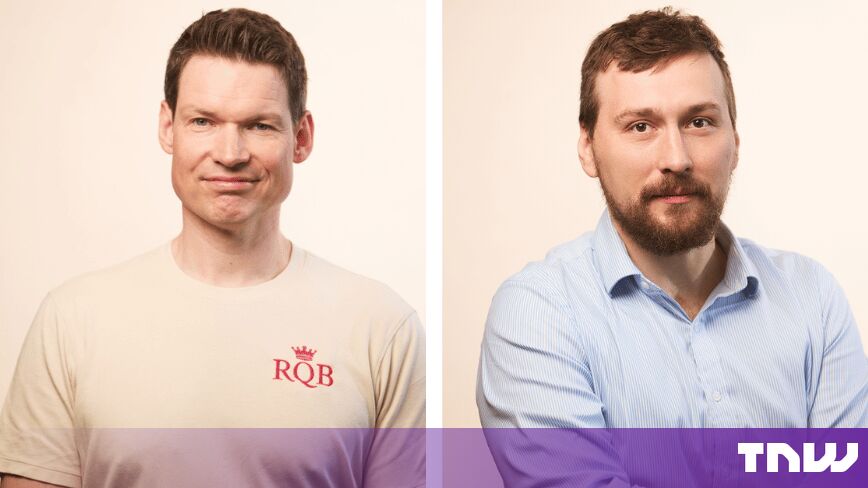
Red Queen Bio was spun out of biotechnology company HelixNano by founders Nikolai Eroshenko and Hannu Rajaniemi.
The pair had previously worked with OpenAI on biological risk evaluations and concluded that AI’s rapidly improving scientific capabilities could have both medical and security consequences.



AI models can help researchers reason about proteins, drugs and biological systems.
Those same capabilities could potentially be misused.
Red Queen’s response is to apply AI to the defensive side of the problem.
The company uses models to design antibodies that bind to parts of a virus. Scientists then produce and test those candidates in laboratory cells.
The experimental results are fed back into the system so it can generate improved designs.
That creates a repeated cycle of prediction, testing and refinement.
The goal is speed.
Drug development traditionally takes years because researchers have to identify targets, design possible treatments, test them and move promising candidates through clinical trials.
A rapidly emerging biological threat may not provide that much time.
On its official website, Red Queen Bio says its mission is to scale biological defenses faster than frontier AI capabilities grow.
Red Queen Bio says it does not conduct dangerous gain-of-function research and does not create or isolate dangerous pathogens.
Instead, it wants to predict where future threats could come from and prepare countermeasures before an outbreak happens.
That approach is sometimes described as defensive co-scaling.
As AI systems become stronger at biology, the tools used to defend against biological threats would need to improve at roughly the same pace.
Red Queen has already attracted money from the AI industry.
OpenAI led a $15 million seed round when the company launched in 2025. Other investors included Cerberus Ventures, Fifty Years and Halcyon Futures.
The Wall Street Journal reports that the company has since raised $36 million in total funding.
Its first targets include bird flu and other influenza viruses, with clinical testing expected to begin in 2027.
Later programs could expand to coronavirus families, Ebola-like viruses and relatives of smallpox.
Those plans remain early.
An antibody that works well in a laboratory is still far from an approved medicine.
Researchers have to establish whether it is safe, whether it works in humans, how it should be manufactured and how quickly production could scale during an emergency.
That makes Red Queen Bio an experiment in both AI and biotechnology.
AI can potentially narrow the number of molecules researchers need to test, but laboratory evidence and clinical trials still determine whether a treatment actually works.
The AI Decode has covered similar changes in AI drug discovery, where machine-learning systems are increasingly being used to search enormous chemical and biological spaces that would be difficult for researchers to explore manually.
The attraction is straightforward.
A model can evaluate far more possible structures than a person can examine one by one.
The limitation is equally important.
A strong computer prediction is not the same thing as a successful medicine.
Biology remains unpredictable, and even promising compounds can fail once they reach animal studies or human trials.
The second part of the Red Queen Bio story is biosecurity.
Advanced AI laboratories are increasingly studying whether their models can help users perform dangerous biological tasks.
Google DeepMind has also outlined work on bioresilience, while Anthropic and OpenAI have introduced safety evaluations focused on chemical and biological capabilities.
The AI Decode has examined these broader concerns in its coverage of AI development risks, where biological misuse is one reason some researchers want stronger safeguards around frontier systems.
The difficult part is measuring how much AI actually changes the threat.
Highly dangerous biological work still requires specialized laboratories, equipment, materials and scientific knowledge.
An AI model cannot remove every practical barrier.
But it may reduce some knowledge barriers by helping users search technical literature, analyze biological designs or troubleshoot experimental plans.
That is why companies are exploring defenses before the risk becomes easier to measure.
Red Queen Bio is effectively betting that faster AI will need faster medicine.
If its approach works, the same technology raising concerns about biological misuse could also shorten the time required to design treatments against new pathogens.
The first real test will come from its clinical programs.
Until then, the company represents an early attempt to prepare medicine for a biological risk that researchers hope never becomes a real-world emergency.